All aboard the Holiday Express – school holidays start here!
Looking for something to tempt the kids away from their screens this school holiday? In Tartu's Upside-Down House you can walk on the ceiling, and at Tallinn's Seaplane Harbour you can step inside a real submarine. In Latvia, a cable car ride over the Gauja Valley, a space mission in Cēsis and a chocolate workshop in Riga await, while in Lithuania the Šiauliai Cat Museum welcomes visitors with real cats. For the brave, there are spooky Halloween events at Rakvere Castle and in Vilnius.
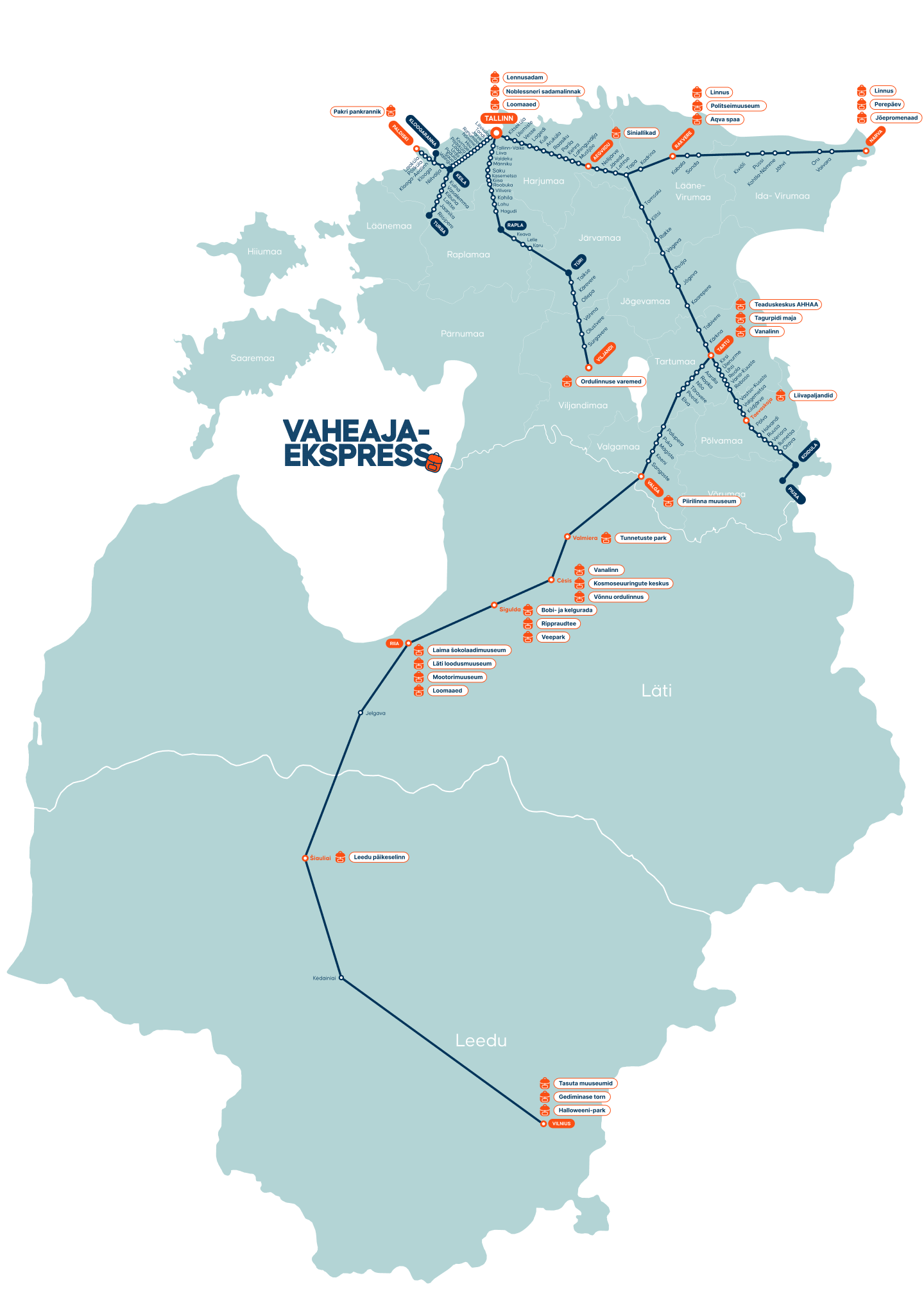
We've gathered over 30 destinations in Estonia, Latvia and Lithuania on one map. Just sit back and enjoy the journey and time with your kids – no need to get behind the wheel. Tickets cost just €4–39.
Are we in Latvia yet?
Riga
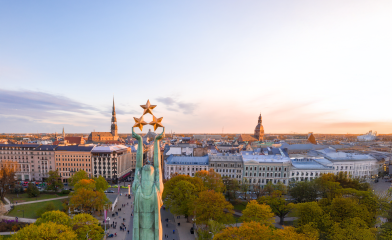
Riga is the largest city in the Baltics and full of fun discoveries for the whole family, big and small. At Riga Zoo you can meet giraffes and lions, and at the Laima Chocolate Museum you can make your own chocolate. At the Motor Museum you can take the wheel of a driving simulator and see the car that Soviet leader Brezhnev crashed himself. At the Museum of Nature, try guessing who the hundreds of skeletons belong to.
Between museums, stroll the cobbled streets of the Old Town, admire the grand Art Nouveau buildings and pop into the Central Market, housed in giant former Zeppelin hangars. A direct train takes you from Tartu to Riga in under four hours.
Things to do in Riga
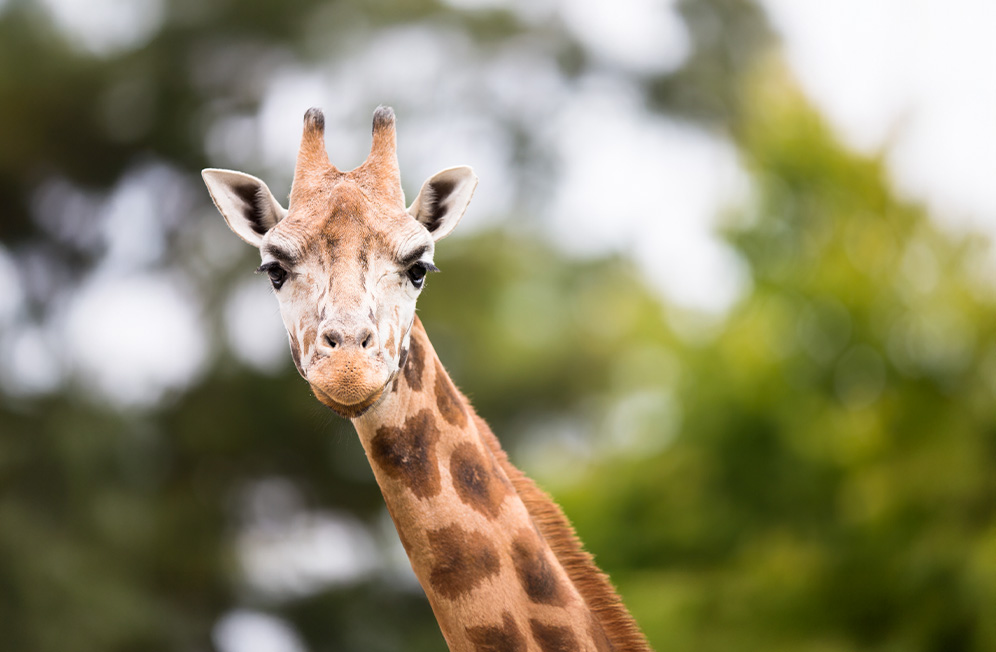
The oldest zoo in the Baltics is home to 400 species and nearly 3,000 animals. Here you’ll find creatures from all over the world – from graceful giraffes to brave lions, and from hard-working ants to colourful little fish. When it’s cold outside, step into the warm Tropical House or the aquarium, where exotic animals go about their business as if in an endless summer.
Keep your eyes peeled in the dimly lit night section of the Tropical House – it’s home to animals that are awake while everyone else is asleep.
- Read more: Riga Zoo
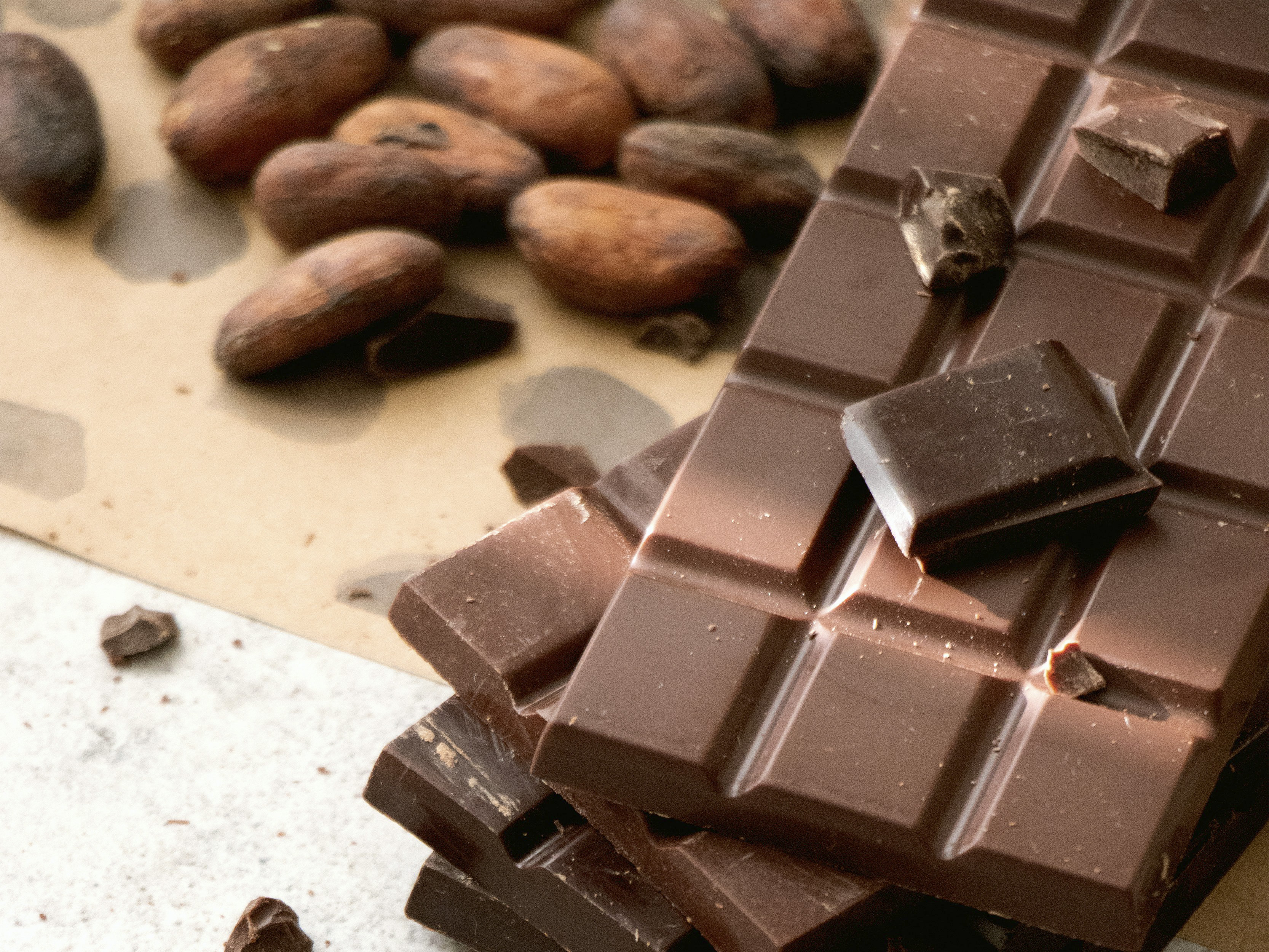
Do you know how cocoa beans turn into chocolate? Latvia’s largest chocolate maker, Laima, opens the doors of its historic factory building and invites you to discover the world of chocolate with all your senses. Browse exhibits more than 120 years old, find out how sweets have been made in Riga since 1870, and have your own personal message printed on a bar of chocolate. A cup of hot chocolate awaits to warm you up. The sweetest part is the workshop – make your own chocolate, add your favourite ingredients and take your treats home with you. It’s best to book a place at the workshop well in advance.
- Read more: Laima Chocolate Museum
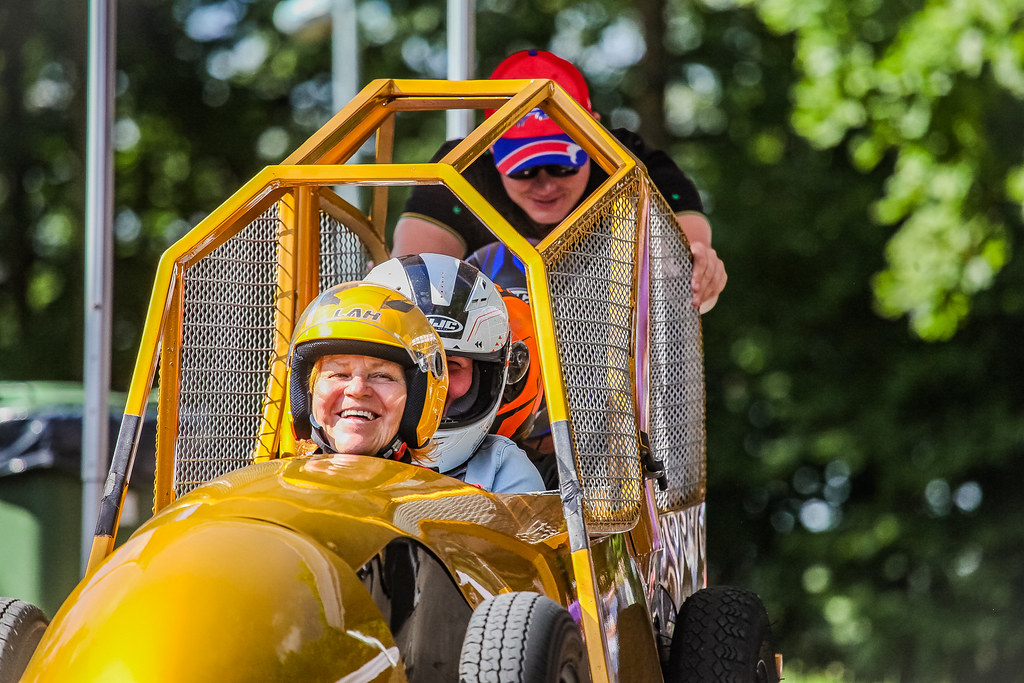
Over a hundred unique antique vehicles await you at the Riga Motor Museum. See stylish retro cars, racing machines and a working replica of the Benz Patent-Motorwagen, considered the world's first car. Here you'll also find one of the first cars built by a Latvian – the 1903 Krastiņš, the only one of its kind left in the world. The Kremlin collection brings history to life with Stalin's 7-tonne armoured limousine and the Rolls-Royce that Soviet leader Leonid Brezhnev crashed himself.
You don't just look at the exhibits here – three floors are packed with interactive activities and a driving simulator where you can take the wheel yourself. Younger car fans have their own play area, and children aged 6 and under get in free.
- Read more: Riga Motor Museum
At the oldest natural history museum in the Baltics, you can come face to face with animals you'd never get this close to in the wild. The Skeletarium holds nearly 300 animal skeletons – can you guess who they belong to? Take a close look at life-size stuffed animals, explore fossils and minerals, and step back in time to the age of the dinosaurs. Interactive activities keep curious explorers of all ages engaged.
To explore the exhibitions in more depth, download the museum's free mobile app “Dabas muzejs”, which is also available in English. The app features audio guides, 360-degree images, games and a special route for children.
- Read more: Latvian Museum of Natural History
Sigulda
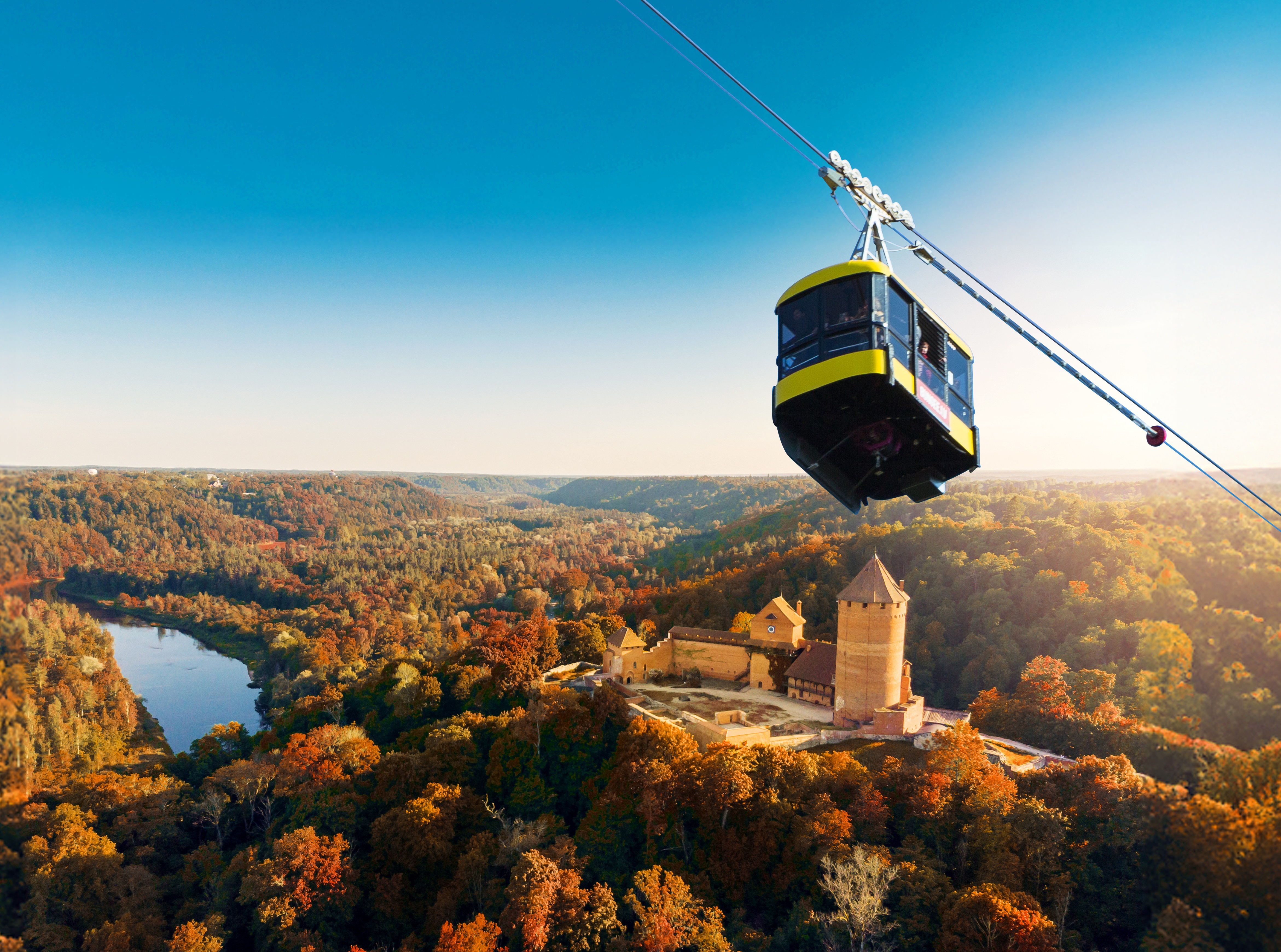
Sigulda is made for adventure! Latvians call this picturesque town the Switzerland of Vidzeme and flock here every autumn to see the trees turn gold. Glide high above the Gauja Valley on the cable car as medieval Turaida Castle rises above a sea of autumn colour. Its name comes from the Livonian language and is poetically translated as “God's Garden” – and it's where Latvia's most famous love story, the legend of the Rose of Turaida, was born. Check out the legendary bobsleigh and luge track, where top athletes train, then warm up at the water park, where 40-metre slides keep summer going all autumn long.
Foto: Sigulda Country Tourism Information Centre
Things to do in Sigulda
The Sigulda Bobsleigh and Luge Track is one of only a handful of its kind in the world, set in the picturesque Gauja Valley. With 1,420 metres of bends and speed, it's where the world's best bobsleigh, luge and skeleton athletes train and compete.
You can explore the track every day from 8 am to 8 pm: walk along its steep bends and climb up to the viewing platform on the sixth floor for views over Sigulda and the Gauja Valley. And if you want to race down it yourself, come back in winter – once the track is iced over, visitors can try bobsleigh rides too.
- Read more: Sigulda Bobsleigh and Luge Track
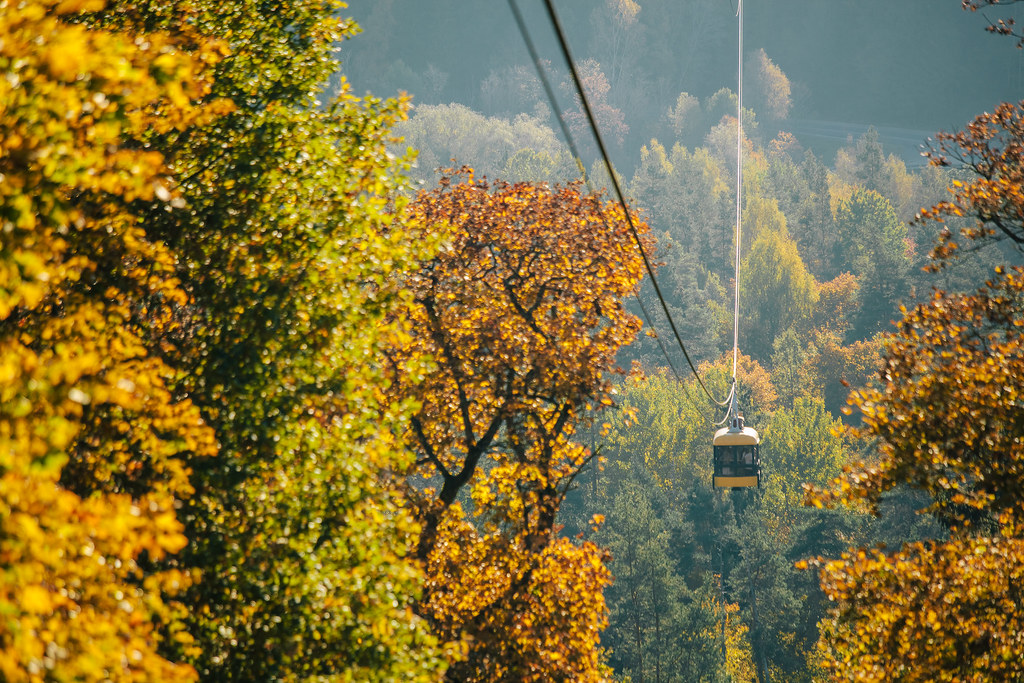
Step into the gondola and rise 43 metres above the Gauja River! The only cable car in the Baltics has been carrying passengers from Sigulda towards Krimulda since 1969. Along the way, enjoy views of the ancient valley, the river, the bobsleigh track and three medieval castles – Sigulda, Turaida and Krimulda.
The ride is especially magical in autumn, when the forests turn gold and red. Keep your eyes peeled during the ride – the cable car's mascot, a bear, is hiding in one of the trees. Can you spot it?
And the bravest can come back in summer for a bungee jump – Sigulda is the only place in Europe where you can jump straight from a cable car gondola.
Tip: on the Krimulda side, tickets can only be paid for in cash.
- Read more: Sigulda Cable Car
At the Sigulda Sports Centre, just a short walk from the railway station, a cosy +30 °C water world awaits, where you can forget the autumn chill and have fun with the whole family. Latvia's Olympic athletes train in the same building.
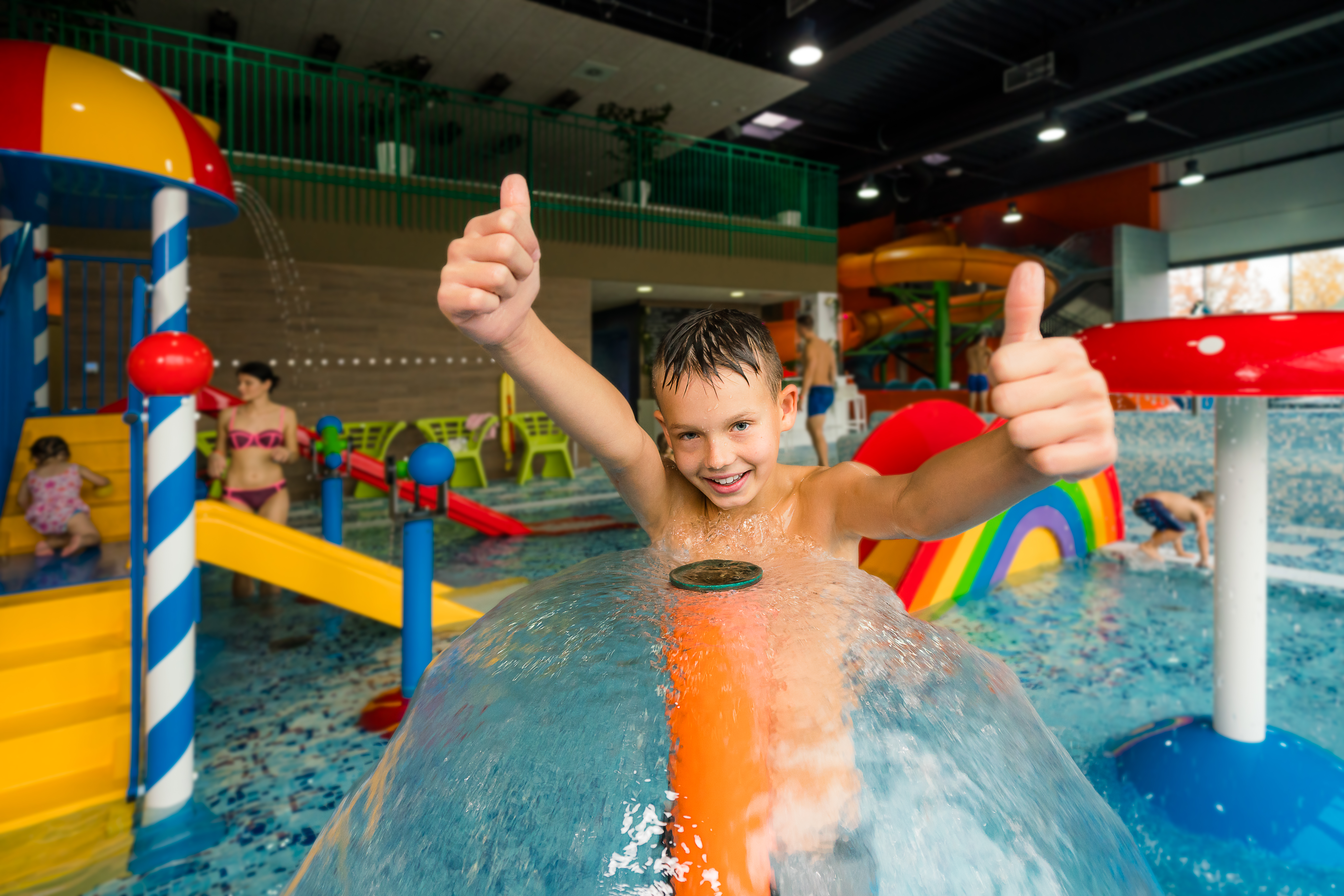
Whizz down the 40-metre water slides, enjoy the water cascades and the lazy river, relax in the jacuzzi or explore the children's splash area. After all that splashing, you can unwind in the saunas.
- Read more: Sigulda Sports Centre
Cēsis
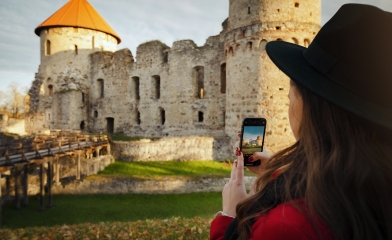
About the size of Viljandi, Cēsis is one of Latvia's oldest towns and a place close to Latvian hearts – it is considered the cradle of the red-white-red Latvian flag, as the earliest written record of the flag comes from here.
Estonians know Cēsis as Võnnu: in June 1919, Estonian and Latvian troops fought side by side here against Baltic German and German forces, and it is in honour of this victory that Estonia celebrates Victory Day every year on 23 June.
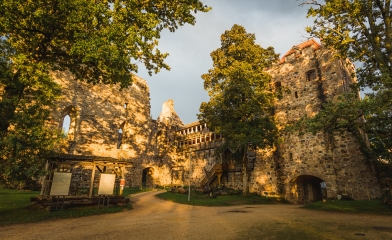
Yet this charming little town is still undiscovered by many visitors. Wander the dark passages of Cēsis Medieval Castle, climb the tower by lantern light, take on a real space mission and end the day in the old town with a warm coffee and a sweet pastry.
Things to do in Cēsis
Ready for some time travel? Cēsis Castle was once the mightiest fortress of the Livonian Order and the headquarters of its masters. Today it is the best-preserved medieval castle ruin in Latvia.
Grab a lantern and climb the dark stairs of the West Tower, where there is no electricity and the way is lit only by candlelight. From the tower you can see the castle ruins, the park and the whole of Cēsis. The same ticket also gets you into Cēsis New Castle, home to the town's history and art museum – which also holds one of the earliest Latvian flags.
- Read more: Cēsis Medieval Castle
How about spending a day like a real astronaut? Cēsis is known as Latvia's space capital – it hosts a space festival every year and is home to one of the most exciting space centres in the Baltics. At the Space Research Centre you can try out interactive exhibits, find out how astronauts train and learn what life in space is like.
The highlight is the “Auseklis” mission in a two-storey space station: one person is the astronaut on board while the other runs the mission from Earth. Together you have to solve tasks, communicate and react to unexpected situations. Younger children have their own play corner.
The centre is open Tuesday to Sunday and closed on Mondays.
- Read more: Cēsis Space Research Centre
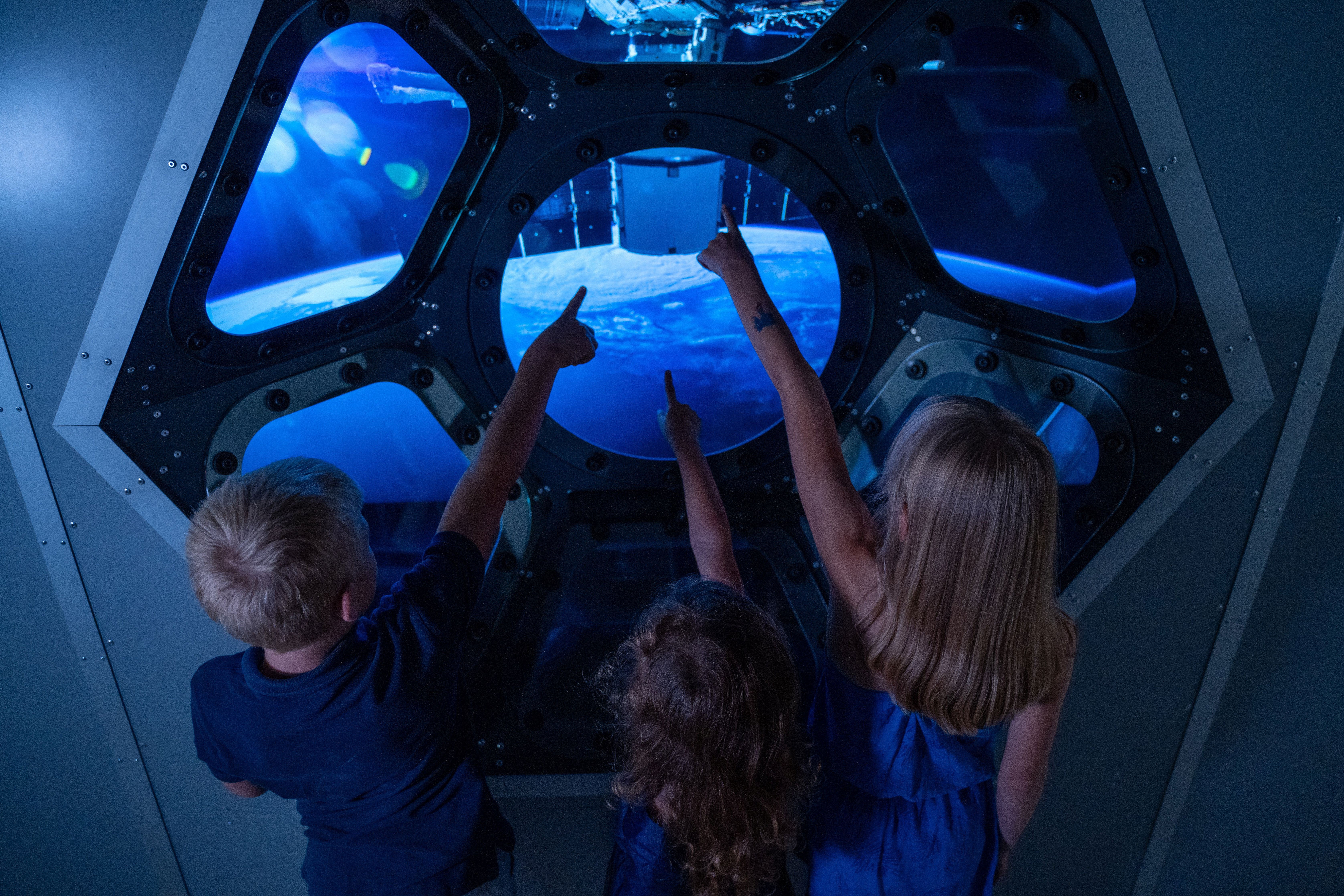
Photo: Madara Kuplā
Cēsis Old Town is like a little journey through time – medieval cobbled streets, historic houses and romantic corners create a cosy atmosphere that is simply lovely to wander and explore. Above the old town rises the 13th-century St John's Church, one of the largest medieval churches in Latvia.
Walking from the castle towards the old town, you'll find cosy cafés, restaurants, small shops and galleries along the way. The Victory Monument on Vienības Square, erected in memory of the Battle of Cēsis, is a reminder of how closely Estonian and Latvian history are intertwined here. Slow down, enjoy a hot drink and a slice of cake, and let the relaxed rhythm of Cēsis carry you along.
- Read more: Visit Cēsis
Valmiera
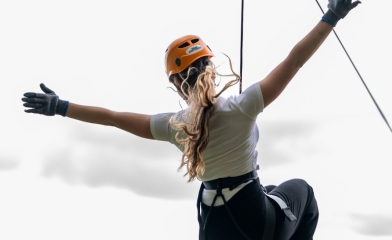
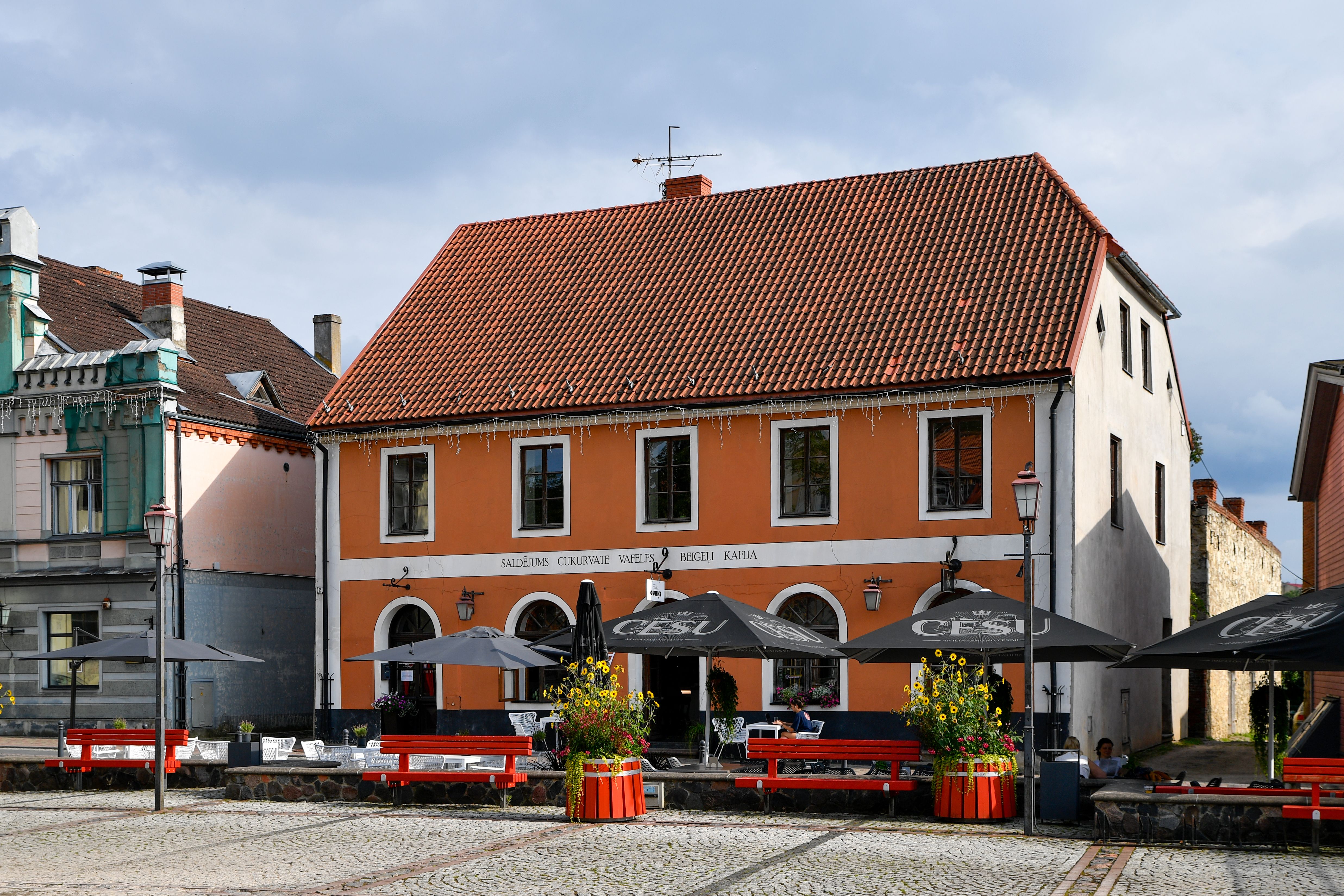
Valmiera is the largest town in Vidzeme and an old Hanseatic town where history, sport and youth go hand in hand.
The town was founded in 1283 on the beautiful sandstone banks of the Gauja River and has the oldest town coat of arms in Latvia. Valmiera is only about 50 kilometres from the Estonian border – too far to throw a stone, but by train you'll be there before the tea from your thermos has cooled. Climb through the treetops, go ice skating, climb a church tower and stroll along the autumn-coloured banks of the Gauja – there's something to do in any weather.
Things to do in Valmiera
If you're after a real adventure, Valmiera's Park of Senses is waiting! Along the steep banks of the Gauja, a 1.5 km adventure trail winds through the treetops 5–11 metres above the ground, where you can climb, balance and zoom along zip lines – four of them even take you across the Gauja River.
Smaller adventurers have plenty to explore too – try the children's trail, the 4-metre-high net labyrinth and the barefoot trail. Valmiera's beautiful hiking trails also start from the park.
Tip: the adventure trails are mainly open from May to September. In autumn and winter, visits must be arranged in advance.
- Read more: Visit Valmiera
When it's chilly outside, Valmiera has plenty of warm and active holiday options. The Valmiera Olympic Centre ice hall hosts public skating sessions where the whole family can get out on the ice. Afterwards, head to the Valmiera swimming pool, which has its own play area for children.
Tip: check the skating times before you go, as the ice hall also hosts hockey matches.
- Read more: Visit Valmiera
Above Valmiera's old town rises St Simon's Church, built in 1283. Climb its tower and watch the town and the autumn-coloured Gauja valley spread out beneath you – a challenge for the kids: count how many different autumn colours you can spot from the tower! Near the church you can explore the ruins of the Livonian Order castle – the same order also built the castles in Cēsis and Viljandi.
Then follow the hiking trail along the steep sandstone banks of the Gauja and the new river promenade completed in 2026. Challenge for the kids: at least 5,000 steps on your autumn outing!
- Read more: Visit Valmiera
Are we in Lithuania yet?
Vilnius
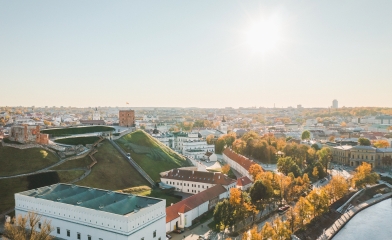
Vilnius is the capital of Lithuania and has one of the most beautiful old towns in Eastern Europe, where baroque church towers rise above red rooftops. The city was first mentioned in 1323 in the letters of Grand Duke Gediminas.
Vilnius isn't far from Estonia, yet few travellers from here make it this far. The train ride here is an experience in itself: Latvian and Lithuanian forests, villages and small towns slide past the window – the Baltics as you never see them from the road or a plane.
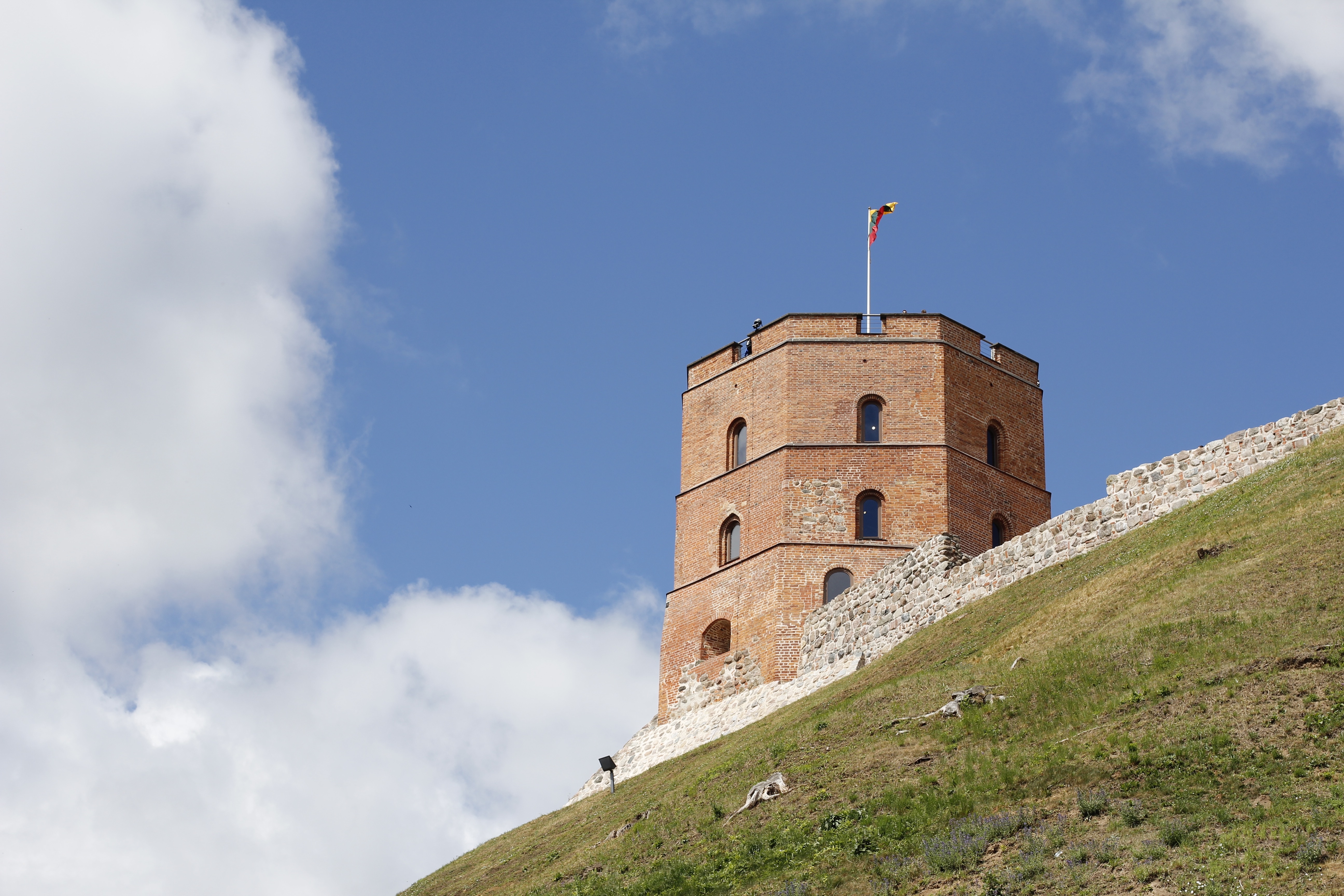
Exploring Vilnius starts right at the railway station, where old steam locomotives await you at the Railway Museum's outdoor exhibition. Then watch the Tesla coils' lightning show at the Energy and Technology Museum, climb Gediminas' Tower, where according to legend Vilnius began, and stroll through the winding streets of the old town to the artists' republic of Užupis. As the sun sets, head to Kalnų Park, which turns into a cursed circus for Halloween.
Photo: Simas Bernotas/Lithuania Travel
Things to do in Vilnius
When you arrive in Vilnius by train, you don't have to go far for adventure – the Railway Museum is located right at Vilnius railway station. Its outdoor exhibition displays more than 30 historic railway vehicles on four tracks: carriages, locomotives and old steam engines. The outdoor exhibition is free to visit, and the chime of the historic station clock will make any train lover's heart beat faster. Indoors, the story of the railway continues with interactive exhibits.
- Read more: Go Vilnius: things to do with kids
At this museum, housed in Vilnius' first power station, you can try science out for yourself. The most spectacular sight awaits in the Faraday cage of the Transformation Hall, where the largest Tesla coils in the Baltics create real lightning during the daily Tesla show. Solve interactive tasks in the hall, collect energy quanta and exchange them for souvenirs and an “engineer” certificate with your portrait! The museum also has two floors of interactive experiments for kids, a power plant control panel, a slide and an astronaut simulator.
Tip: the museum is open Tuesday to Sunday, 10:00–18:30. Entry to the Transformation Hall and the Tesla show costs extra, and it's worth buying tickets in advance, as the hall holds up to 100 people at a time.
- Read more: Energy and Technology Museum
Discover the place where, according to legend, Vilnius began. Folklore has it that Grand Duke Gediminas dreamt of an iron wolf howling on this hill and decided to found a city here. Climb the hill and the castle tower, a symbol of the city, for a stunning panoramic view of red rooftops, church spires and the winding streets of the old town.
Tip: from October to March the tower is open daily 10:00–20:00. You can also walk up the hill. The funicular may not be running.
- Read more: Gediminas' Tower
For Halloween, Vilnius' Kalnų Park turns into the “Cursed Circus”, where spooky magic comes to life and creepy surprises lurk around every corner.
Lift the curtain of the haunted circus and step into a Halloween world where handcrafted installations, the circus's strange residents and a horror tunnel will test the nerves of even the bravest. Little ones have their own area with carousels.
Tip: the park is open daily 15:00–22:00 until 8 November.
- Read more: Cursed Circus in Kalnų Park
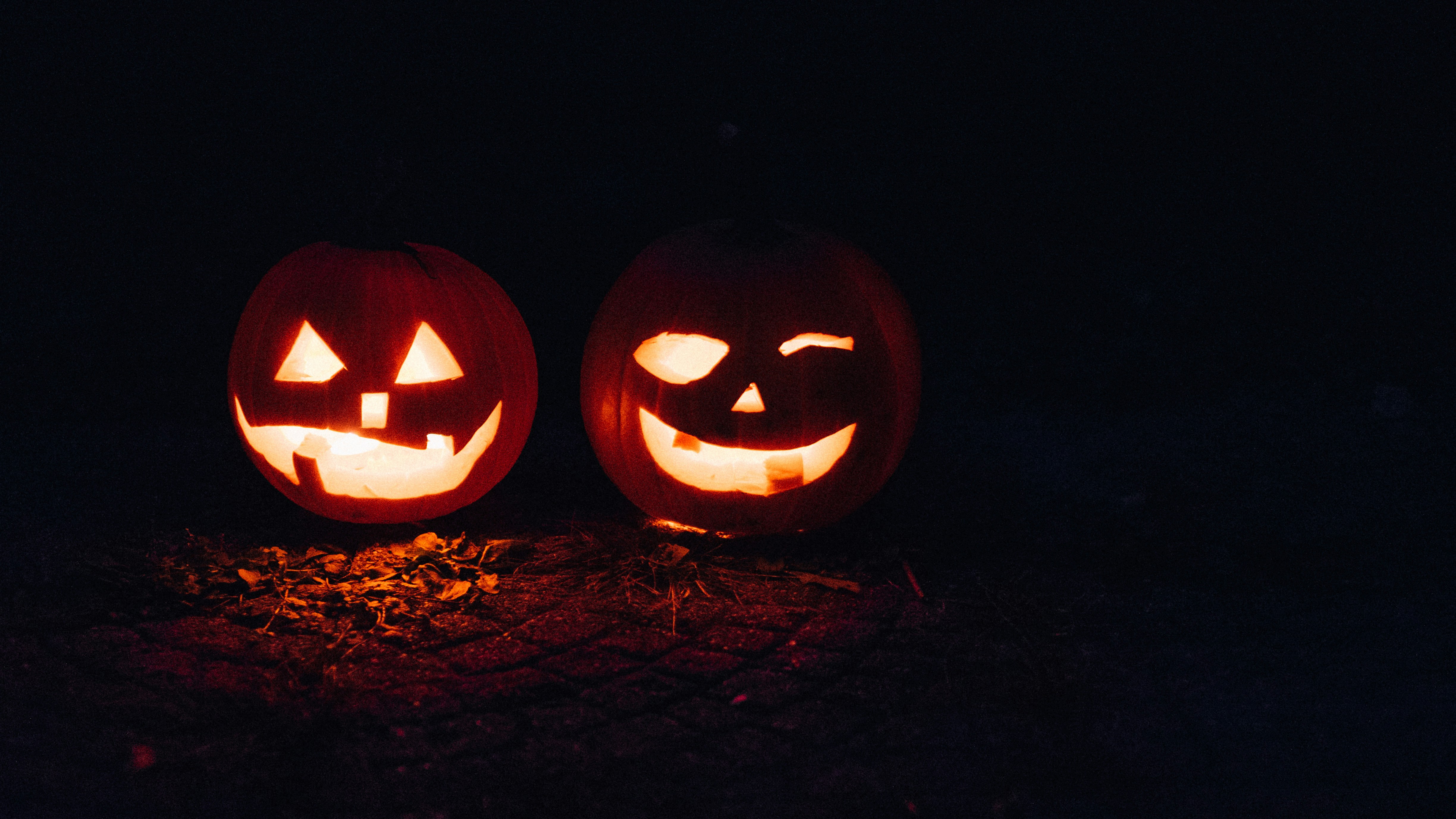
Photo Beth Teutschmann/Unsplash
Šiauliai
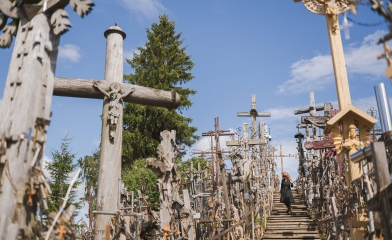
Šiauliai is Lithuania's fourth-largest city and calls itself the City of the Sun – in 1236 it was the site of the Battle of Saule, where the Livonian Brothers of the Sword suffered a crushing defeat. This battle gave rise to the Livonian Order, whose castles still stand in Cēsis, Valmiera and Viljandi.
Šiauliai lies on the way when travelling to Vilnius by train and makes a great stopover. It is also Lithuania's cycling capital: the first Lithuanian bicycles were made here, and today it is home to the largest bicycle factory in Northern Europe. Visit the world-famous Hill of Crosses, meet real cats at the Cat Museum, discover the secrets of chocolate at the Rūta Chocolate Museum and stroll between the museums along Šiauliai Boulevard, where sculptures, cafés and ice cream parlours invite you to stop.
Photo: Simas Bernotas
Things to do in Šiauliai
The Hill of Crosses, 12 km north of Šiauliai, is one of the best-known and most moving places in Lithuania. The first crosses were placed here in the 19th century after the uprisings, when families could not find the graves of their fallen loved ones and brought crosses in their memory. During the Soviet era there were repeated attempts to destroy the crosses, but people always brought them back, and so the hill became a symbol of Lithuanian resistance and faith. In 1993 it was also visited by Pope John Paul II.
Today people come to the Hill of Crosses to pray, remember loved ones and express their hopes. Many leave a cross, a rosary or a small keepsake – so the hill now holds more than 200,000 crosses, from giant wooden ones to tiny pendants. If you come with children, explain that this is a sacred place where people walk quietly and respectfully.
Tip: entry is free and the hill is always open. You can get there from Šiauliai by bus or taxi.
- Read more: Hill of Crosses
The Šiauliai Cat Museum was born out of one woman's great love of cats: in 1990, Vanda Kavaliauskienė's collection grew into Lithuania's only cat museum and one of the largest in the world. Its three halls are filled with thousands of cats from all over the world – figurines, a cat clock, stained glass, funny poems and even cats painted on the ceiling. Best of all, though, are the museum's real cats, including the playful Perlas, who is known as the museum's director. Next to the museum is a mini zoo with exotic animals.
- Read more: Cat Museum
The Šiauliai Bicycle Museum is the only museum in Lithuania dedicated to the bicycle. The first Lithuanian bicycles were made here in 1951 – Ereliukas (“Little Eagle”) for boys and Kregždutė (“Little Swallow”) for girls. The museum also displays the ten-millionth Ereliukas, made in 1984. Ereliukas bikes were very common in Estonia in the 1980s and 1990s too, and covered countless kilometres on Estonian roads – maybe you'll find your childhood bike here!
Across three floors you can follow the history of the bicycle, from a wooden running machine from 1792 to modern racing bikes. You don't just look here: children and adults can race each other on replicas of modern and vintage bikes and try out a velomobile.
Tip: the museum is open Tuesday to Friday 10:00–18:00 and Saturday and Sunday 11:00–17:00. The English audio guide is free.
- Read more: Bicycle Museum
Rūta is Lithuania's oldest confectionery factory and has been filling the streets of Šiauliai with the scent of chocolate, caramel and roasted nuts for a hundred years. In the museum, housed in the factory's historic building, you'll discover the four-thousand-year story of chocolate – from the cocoa drinks of the Maya and Aztecs to Rūta's very first sweets. In the workshop you can feel like a real chocolatier, and there are activities just for kids. Afterwards, pop into the historic Rūta café for a hot chocolate.
Tip: the chocolate workshop must be booked in advance.
- Read more: Rūta Chocolate Museum
The symbol of Šiauliai is the golden archer standing atop a tall column in Sundial Square. He commemorates the Battle of Saule in 1236, where the city's story began and which gave it the nickname City of the Sun. On a sunny day, the large sundial in the square tells the time. This is also where you can take the city's most famous photo.
- Read more: Visit Šiauliai
Are we there yet? No – first we have to get on the train
Tallinn
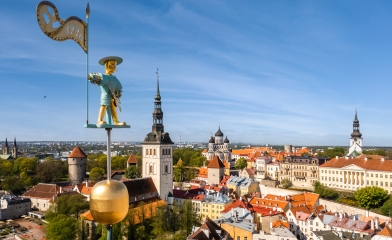
Tallinn is where medieval towers meet the sea. Estonia’s capital combines a UNESCO-listed Old Town, a lively seafront and plenty of family adventures, from climbing aboard a real submarine to saying hello to Inuk the polar bear at the zoo. The direct train from Riga travels via Tartu and pulls into Balti jaam station, right next to the Old Town, so your holiday begins the moment you step off.
More ideas: visittallinn.ee
Photo: Kaupo Kalda
Things to do in Tallinn
Inside the historic seaplane hangars of the Seaplane Harbour, you can step on board the submarine Lembit, explore the century-old icebreaker Suur Tõll and see the oldest known shipwreck of Estonian origin.
Simulators, play areas and hands-on exhibits turn a visit to the museum into an unforgettable experience where learning and discovery go hand in hand.
- Learn more → meremuuseum.ee
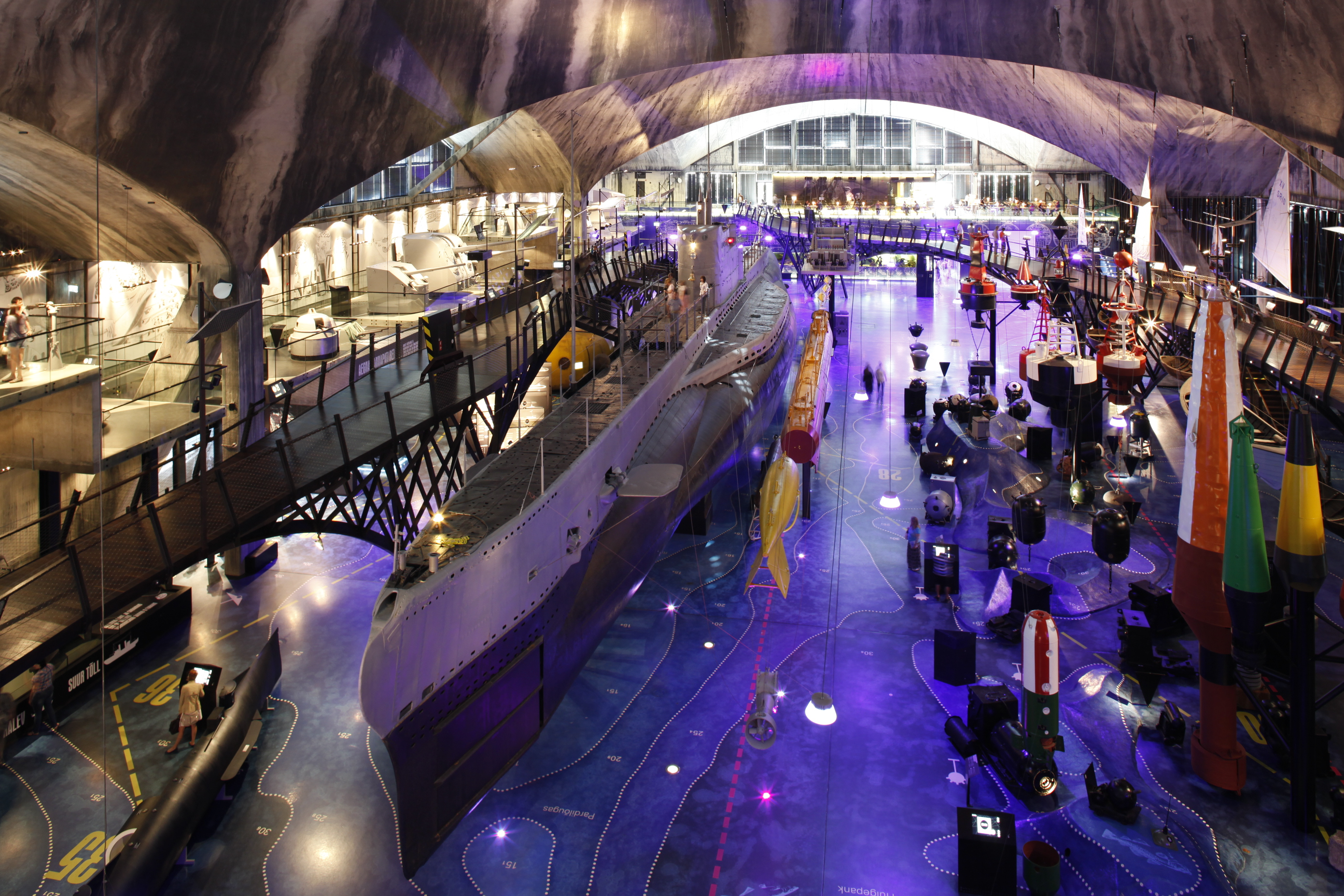
Photo: Paul Kuimet/visittallinn.ee
The promenade and marina provide the ideal setting for a stroll, offering sweeping views of Tallinn Bay and unforgettable sunsets.
It is a wonderful spot to pause at a cosy café and take in the historic architecture – Noblessner has even been awarded the title of the best urban space development in the Baltic States.
On a rainy day, head to the PROTO Invention Factory, where virtual reality lets you fly a hot air balloon or walk on the seabed.
- Learn more → noblessner.ee/en
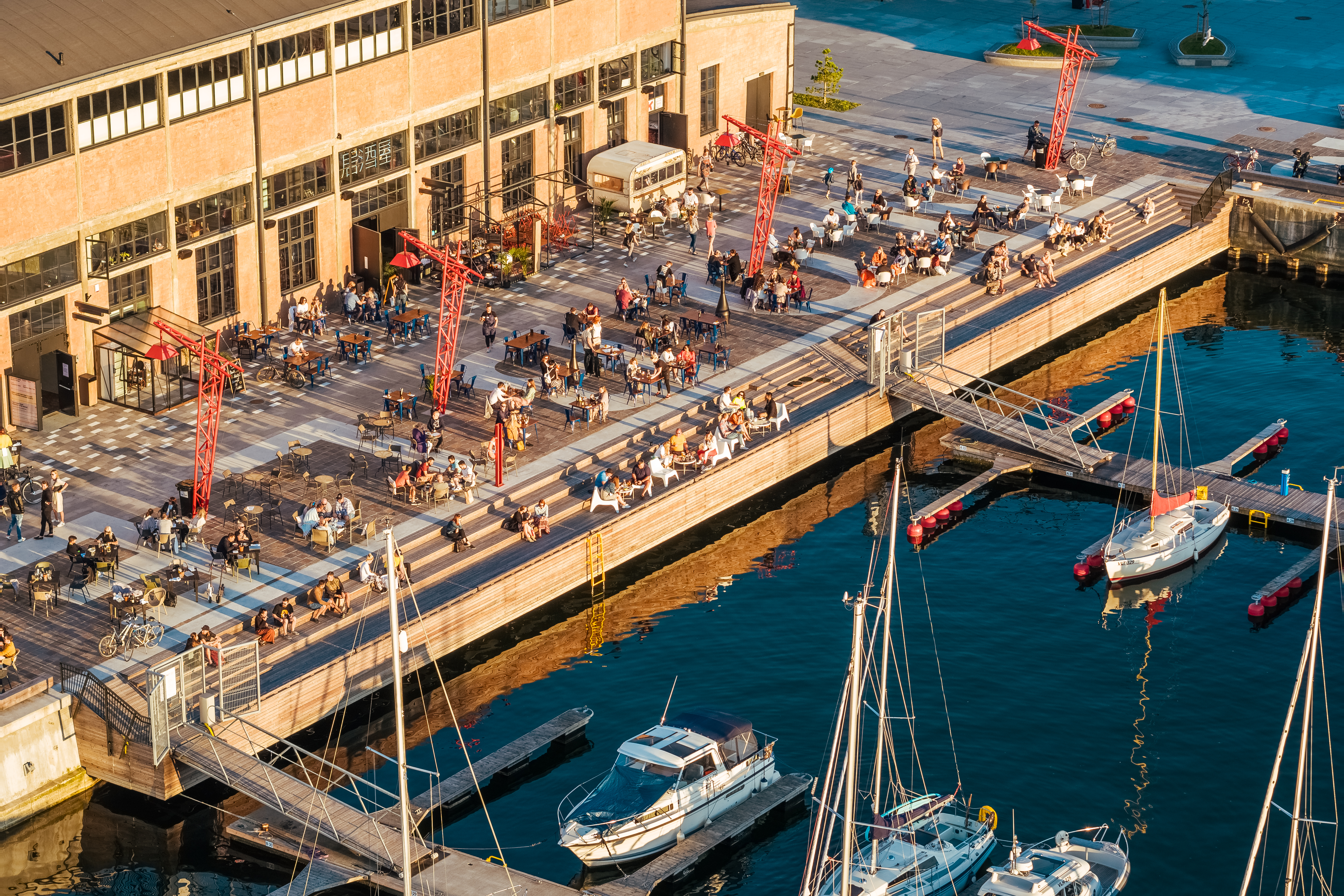
Photo by: Kaupo Kalda/visittallinn.ee
Tallinn’s UNESCO-listed Old Town is just a few minutes’ walk from Balti jaam station. Tallinn was first mentioned as early as 1154, and in the Middle Ages it grew into a wealthy Hanseatic trading town.
Nearly two kilometres of its medieval town wall and around twenty defence towers still stand, and you can step inside some of them. With kids, climb the Kiek in de Kök cannon tower and head down into the 17th-century underground Bastion Passages, meet the puppets at the Museum of Puppetry Art, discover the secrets of the human body at the Estonian Health Museum or explore Estonian nature at the Natural History Museum.
Climb Toompea Hill too – the Patkuli and Kohtuotsa viewing platforms offer sweeping views over red rooftops and the sea. And when little legs need a rest, cosy cafés around Town Hall Square are ready to welcome you.
Learn more → https://www.visittallinn.ee/eng
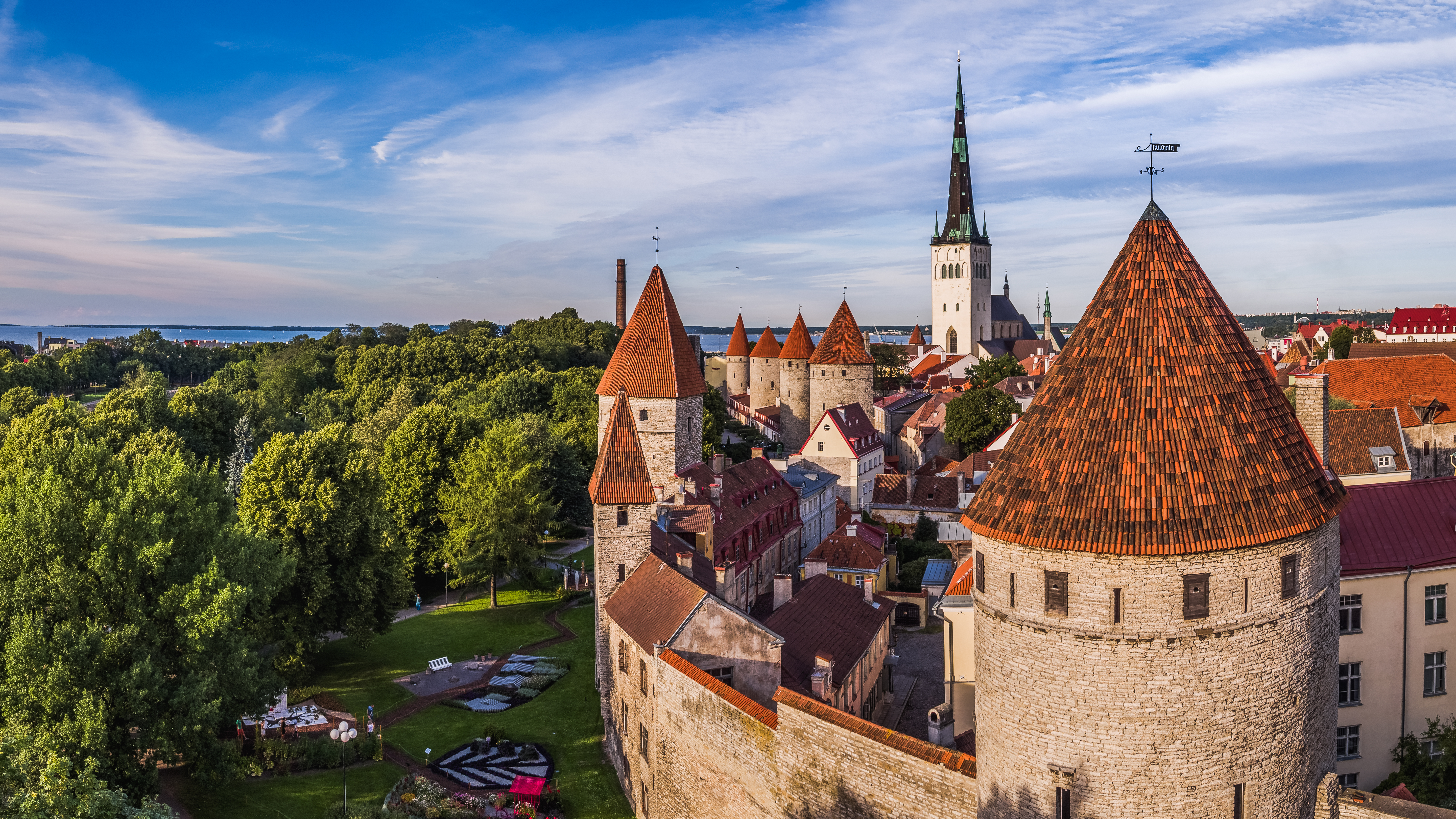
Photo: Kaupo Kalda / Visit Tallinn
At Tallinn Zoo, you can journey to the different corners of the world in a single day: step into a real tropical rainforest, get up close to elephants, polar bears, tigers and lions, and discover many other fascinating animals.
At the children’s zoo, you can get to know some of the animals properly – stroke and brush the goats, and meet the alpacas, rabbits and other adorable small animals.
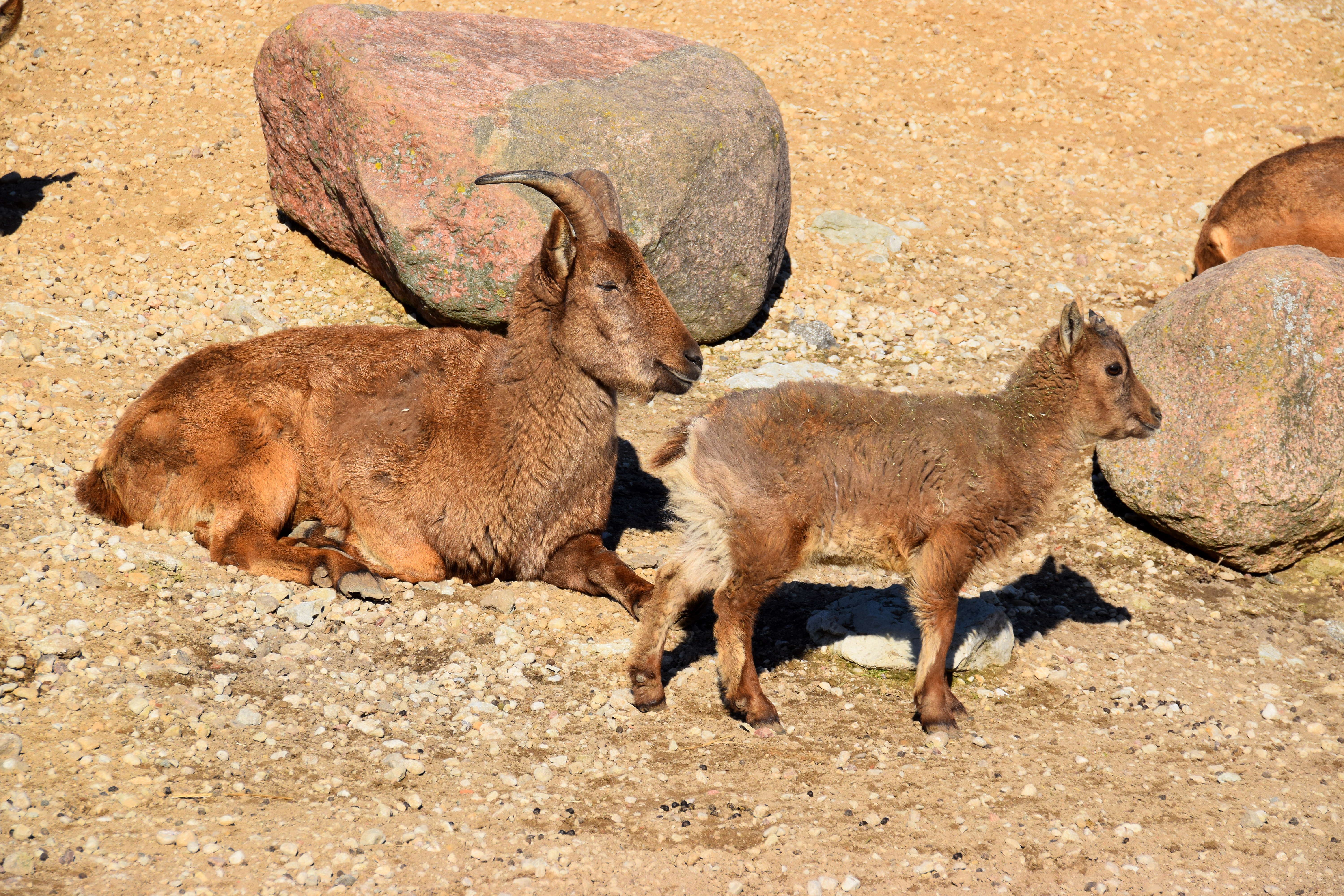
Photo by: Maret Põldveer-Turay/visittallinn.ee
More than 300 years ago, Russian tsar Peter the Great had Kadriorg Park laid out and named it after his wife Catherine – Kadriorg literally means “Catherine’s Valley”.
Stroll around the swan pond, admire the baroque Kadriorg Palace and catch a glimpse of the nearby Estonian Presidential Palace.
The Japanese Garden by the north-east pond offers a peaceful moment, while little ones can head to the Miiamilla Children’s Museum, where everything is made for touching and playing.
For coffee and cake, drop by the historic Katharinenthal café by the swan pond, which bears Kadriorg’s original name. Kadriorg is an easy tram ride from the city centre.
Learn more → https://www.kadriorupark.ee/en
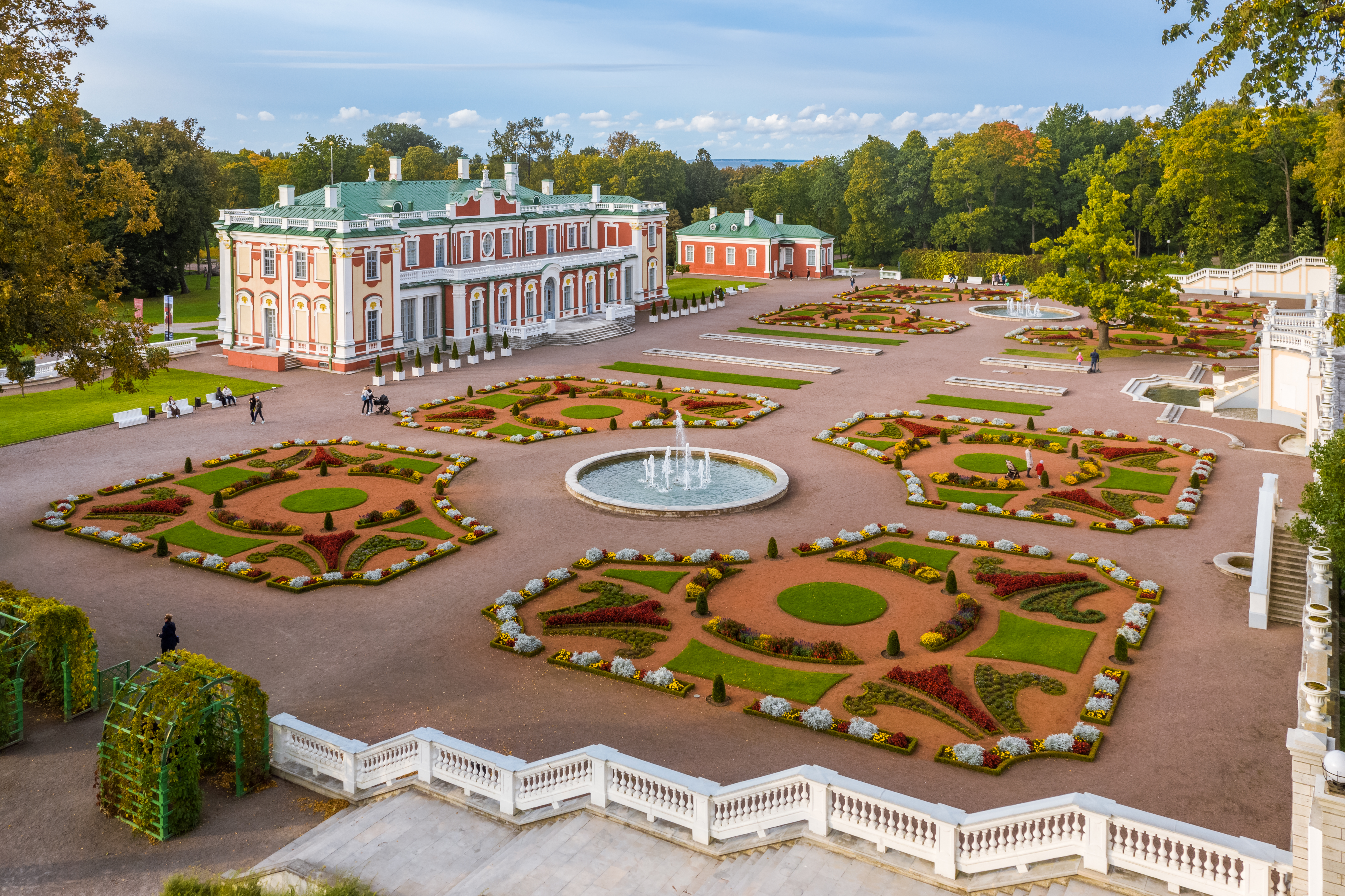
Photo Kaupo Kalda/visittallinn.ee
Tartu
Tartu is Estonia’s student capital: a vibrant, youthful city with nearly four centuries of university tradition. That same spirit of curiosity makes it a perfect school holiday destination for families. You’ll find museums where touching and trying things out is encouraged, a compact Old Town that’s easy to explore with kids, and cosy cafés to warm up in between adventures. Hop on the train and you’re there.
More ideas: visittartu.com
Photo: Kaarel Kõvatu
Things to do in Tartu
At AHHAA, science comes to life and you can get hands-on with it yourself. Put yourself to the test with exciting interactive exhibits and discover how different scientific phenomena work in practice.
In addition, you can watch the bustling life of 20,000 ants and marvel at a 6,000-litre aquarium filled with Red Sea fish and corals.
There is also a planetarium, a science theatre and a variety of workshops to enjoy.
- Learn more → ahhaa.ee
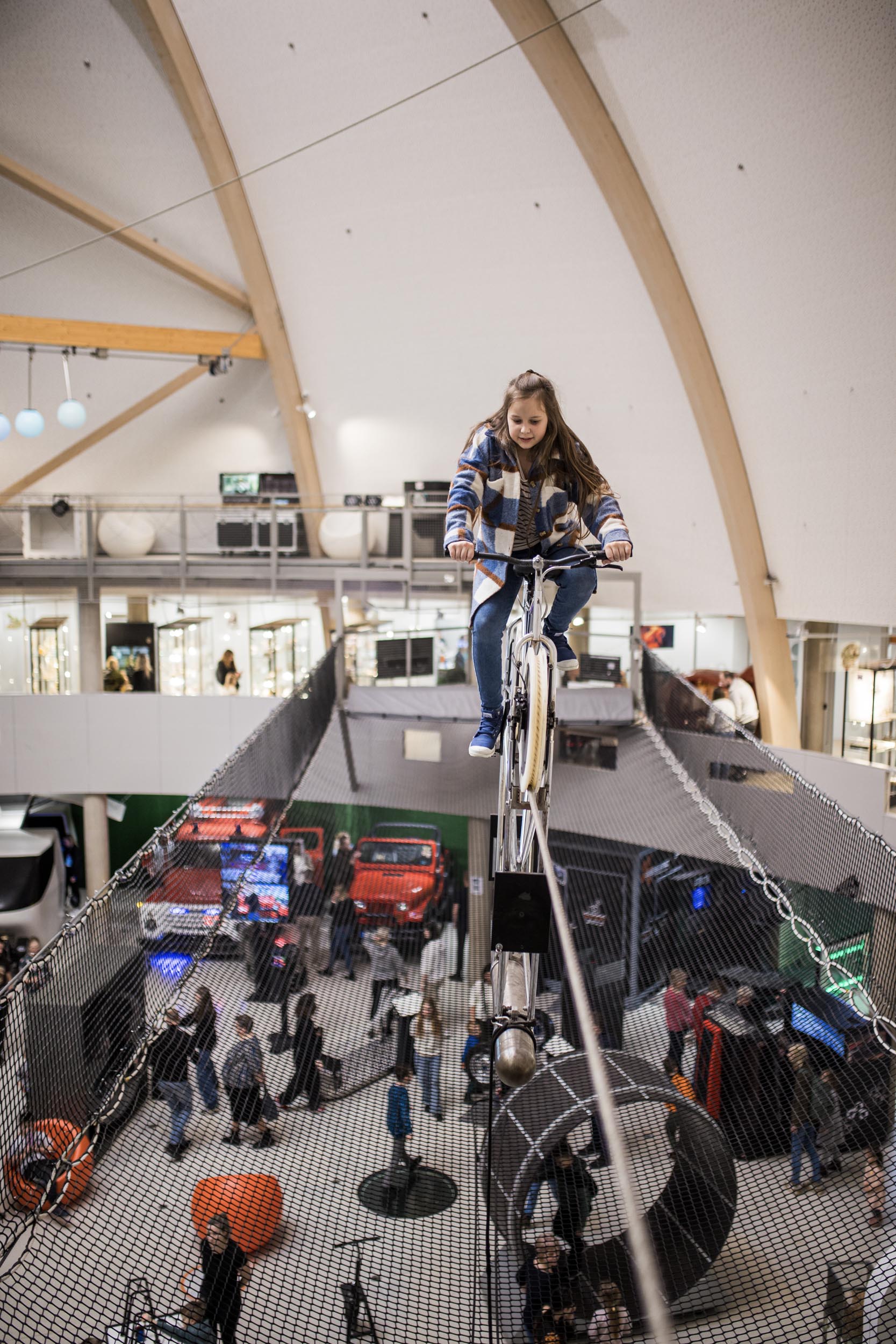
Photo: VIrgo Haan/VisitEstonia
At the Upside Down House, you can experience for yourself what life looks like turned upside down. Step inside what looks like an ordinary house, except that everything is inverted: the floor has become the ceiling and the furniture hangs above your head.
To add to the fun, the house is also slightly tilted, delightfully confounding your sense of balance. Be sure to leave some time for taking photos – every room offers plenty of opportunities for a fun photo shoot.
- Learn more → tagurpidimaja.ee/en
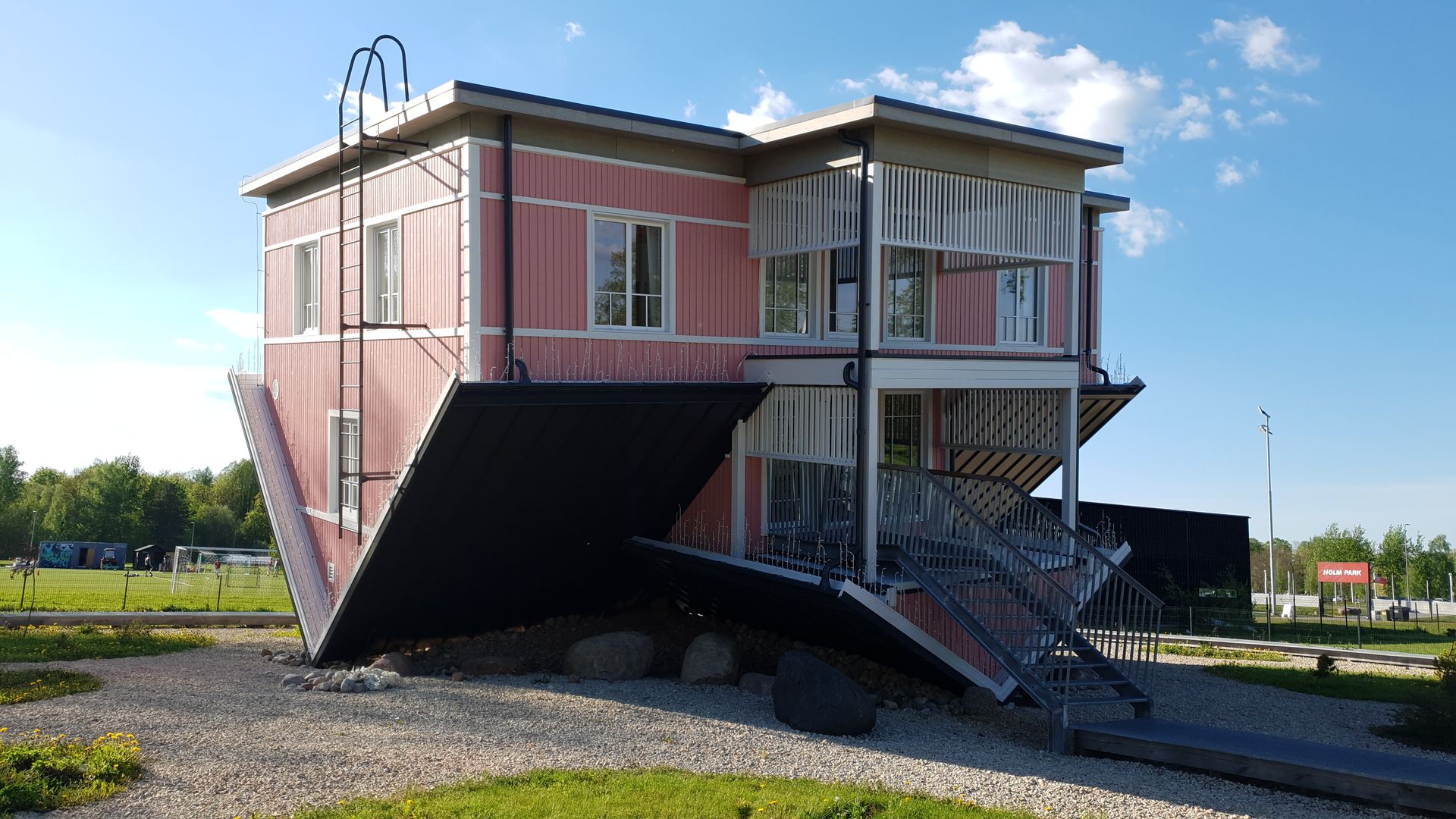
Photo: Upside Down House
At the Estonian National Museum, you can follow a time trail from the present day all the way back to the end of the Ice Age – a journey echoed in the building itself, which narrows from one end to the other.
Rising from an old airfield runway, the museum is over 350 metres long, more than three football pitches end to end.
For kids, there’s a play forest, a family room, an escape room and a children’s audio guide, so there’s enough to keep you busy all day. The museum is right next to the Upside Down House, so you can easily visit both in one day.
Learn more → https://www.erm.ee/en/
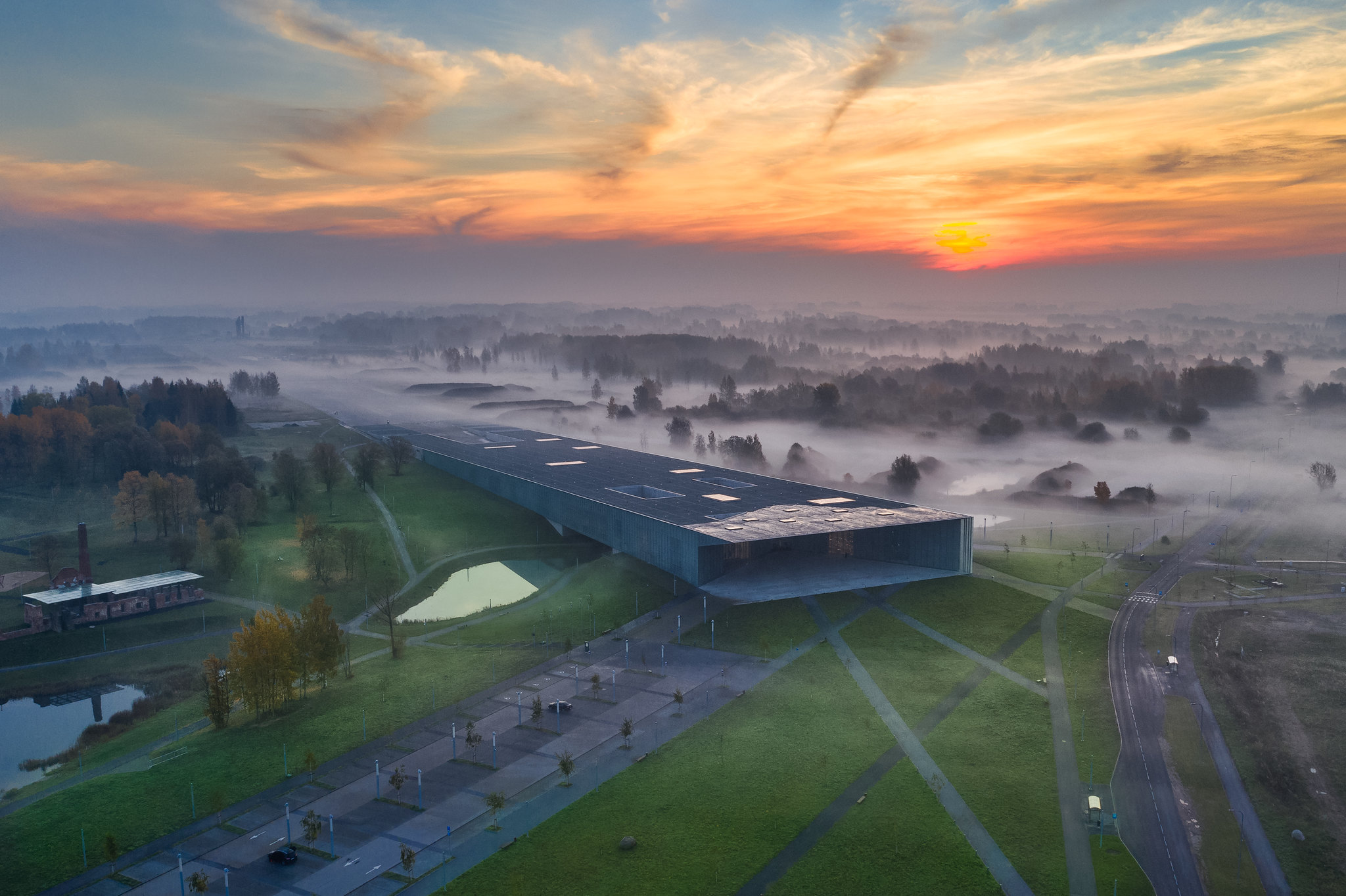
Photo: Tanel Kindsigo / Estonian National Museum
Tartu is delightfully compact: you can walk from the train station to the Old Town in just 15 minutes. The Old Town boasts a wealth of fascinating spots, including the playful Tartu Toy Museum, the Estonian Sports and Olympic Museum, the University of Tartu Museum, the Tartu Old Observatory and the Botanical Garden.
Yet in Tartu you do not always need a set destination. Take a stroll along the banks of the Emajõgi River, explore Toome Hill and the colourful street art, and recharge your batteries in a cosy café.
When your feet grow tired, head off to enjoy the water at Aura Centre or V Spa.
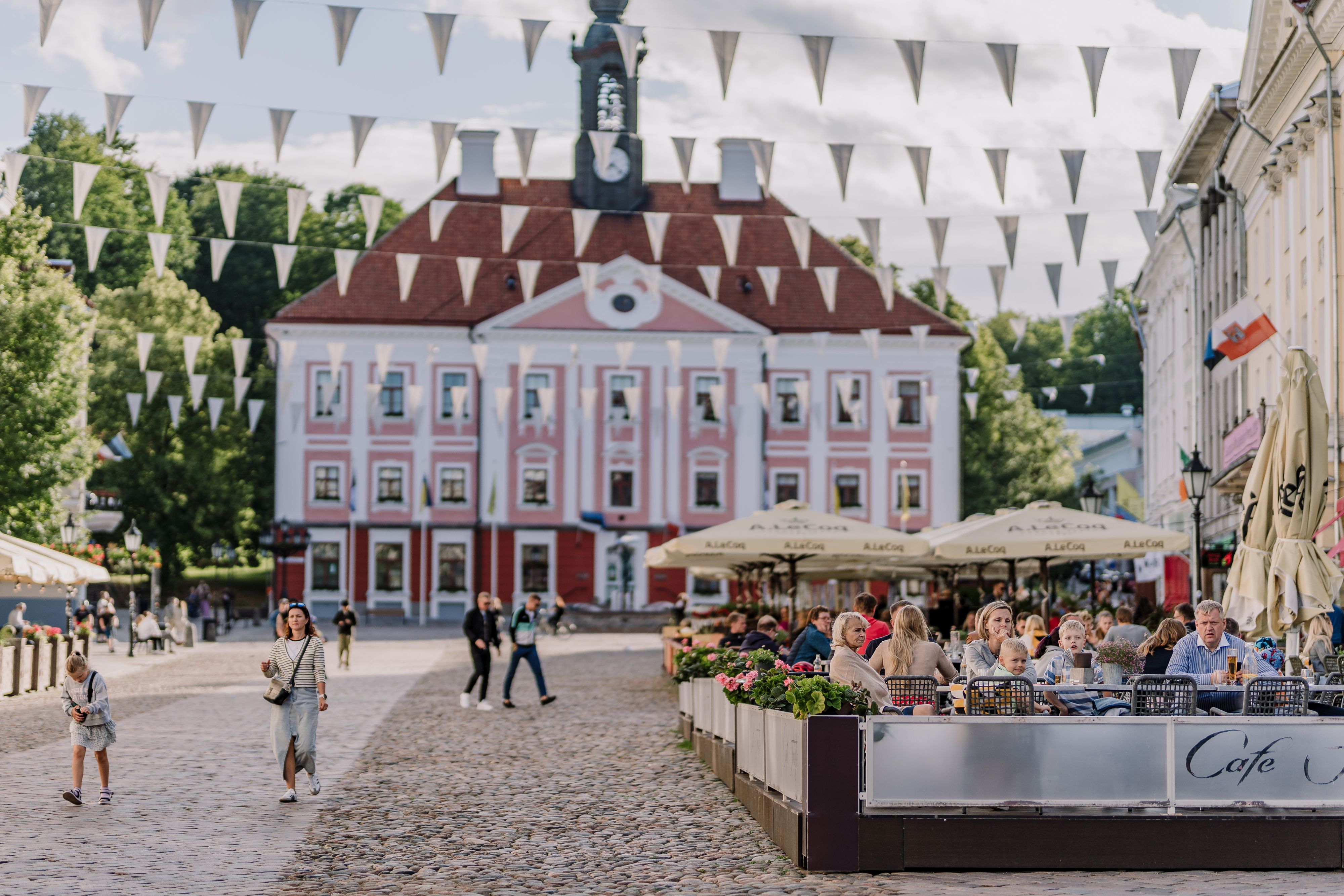
Photo by: Mana Kaasik
Narva
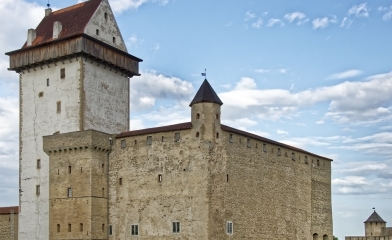
Narva is known as Estonia's autumn capital – an exciting border town where centuries of history meet a modern, fast-developing city. Climb the 51-metre Tall Hermann Tower of Narva Castle, from where you can also see Ivangorod Fortress on the opposite bank of the river, and look at the model of Old Narva, which shows how beautiful the old town was before the war. Stroll along the riverside promenade right on the border of Europe and discover the mighty factory buildings of the Kreenholm Manufactory. You can reach Narva by direct train from Tallinn. Just 20 minutes away, Narva-Jõesuu awaits with its long sandy beach and spas!
Things to do in Narva
Narva's Hermann Castle has stood on the border of Europe for more than 700 years and has belonged to the Danes, Germans, Swedes, Russians and finally the Estonians. Now you can also walk through the previously closed east wing and along the gallery on top of the walls. From the top of the 51-metre Tall Hermann Tower there is a view over Narva, Kreenholm and Ivangorod Fortress on the opposite bank of the river.
- Read more: Narva Castle
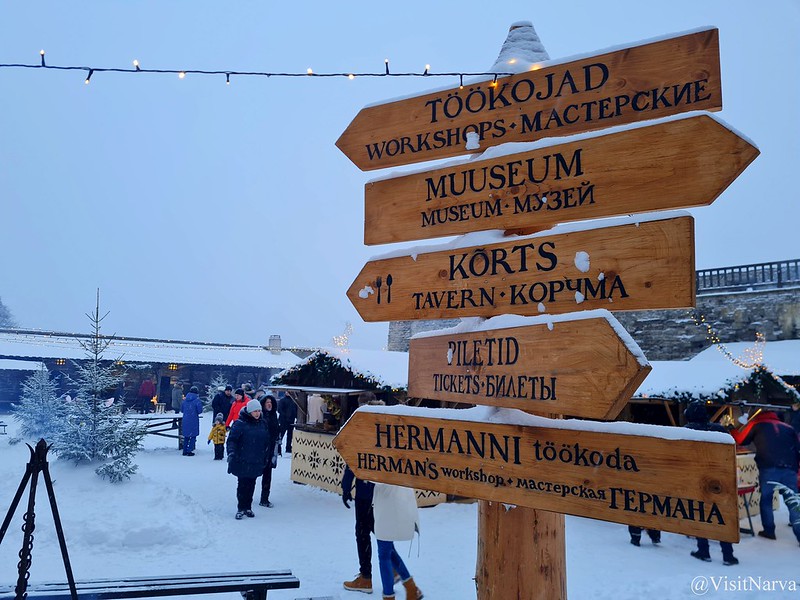
Photo: Angelina Ivanova
Did you know that Narva once had one of the most beautiful baroque old towns in Northern Europe? It was destroyed in the Second World War, but the model of Old Narva shows what the town looked like before the war – narrow streets, grand merchants' houses and the town hall square. Take a close look at the model and try to find places that still exist today. The museum also organises guided tours of the exhibition in Estonian and English.
- Read more: Narva Museum guided tours
Walking along the riverside promenade, you stand right on the border of Europe, with two medieval fortresses facing each other. It's the perfect place for a relaxing stroll and for unforgettable sunsets. At the end of the promenade, on an island in the river, stands the Kreenholm Manufactory – once one of Europe's largest textile factories, whose mighty red-brick buildings show a different, industrial side of Narva.
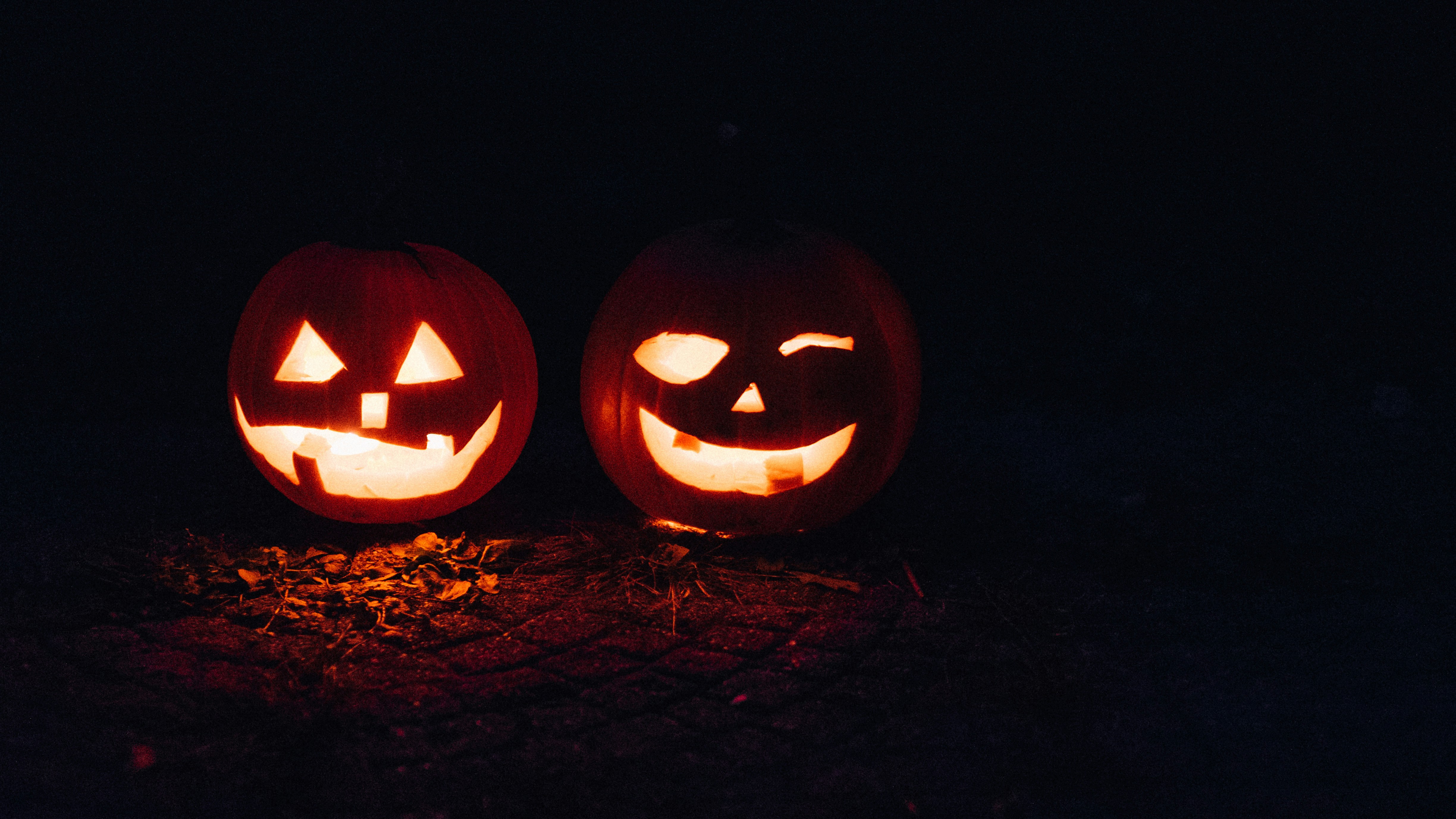
In autumn the nights grow longer, and according to ancient beliefs the boundary between the visible and invisible worlds grows thinner – that is when mysterious creatures appear. On the last Saturday of the holidays, 31 October, the Narva Museum Art Gallery invites families to discover old autumn beliefs, find out who is hiding in the shadows and make a cute and slightly spooky pumpkin lantern!
Tip: children under 8 must be accompanied by an adult. The ticket includes a visit to the exhibition and all materials.
- Read more: Family day “Pumpkin Secrets”
Rakvere
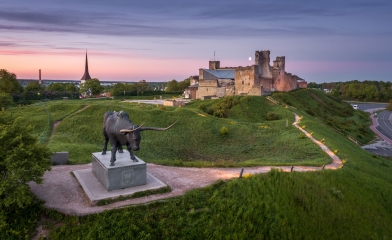
Rakvere is a small town with a big heart. On the hill above the town stands a medieval castle where history isn’t just something to look at, but something to live. Nearby, the giant aurochs statue, the town’s beloved symbol, is waiting for your photos. Add a hands-on police museum and a water park, and your school holiday adventures are guaranteed. From Riga, you can get to Rakvere with a single ticket and just one change.
More ideas: visitrakvere.com
Photo: Elvis Antson
Things to do in Rakvere
An exciting journey back to the Middle Ages awaits you at Rakvere Castle! Step into the role of a knight or warrior, explore the mysterious rooms of the castle, try your hand at archery and sword fighting, and discover what life was like centuries ago.
Rakvere Castle is more than just a historical attraction – it is an immersive theme park packed with excitement for visitors of all ages.
- Learn more → virumaamuuseumid.ee/en/rakvere-castle/
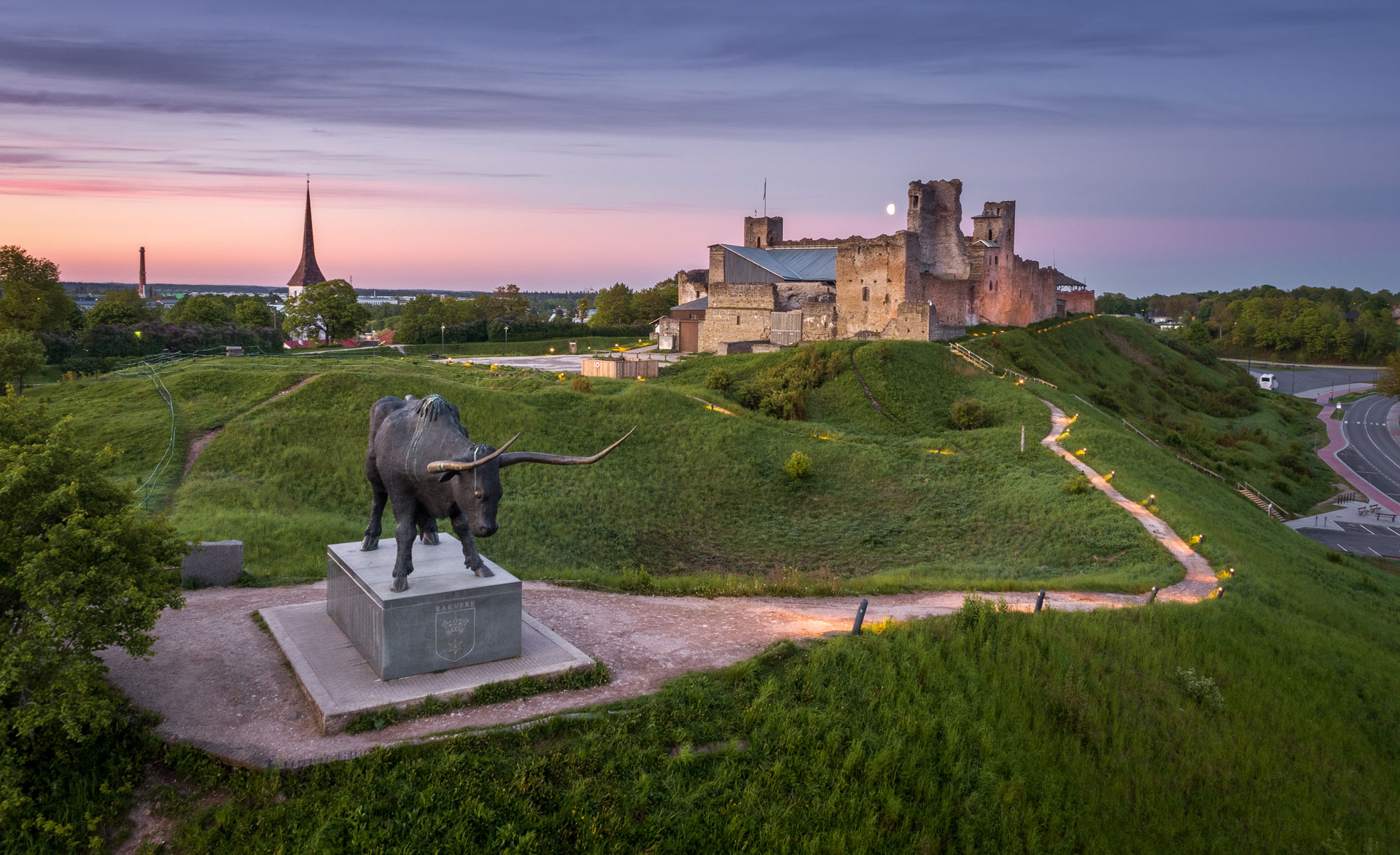
Photo: Elvis Antson
Is there a real police officer hiding inside you? At the Estonian Police Museum in Rakvere, you can try your hand at police work. Take fingerprints, put on police gear, test your reaction speed, step into the shoes of a forensic expert or a special forces officer and discover the fascinating world of policing through play and hands-on activities.
Even the youngest visitors will find plenty to do in the children’s museum and outdoor area, where electric cars, a helicopter, a motorbike, a traffic playground and an agility trail await.
- Learn more → virumaamuuseumid.ee
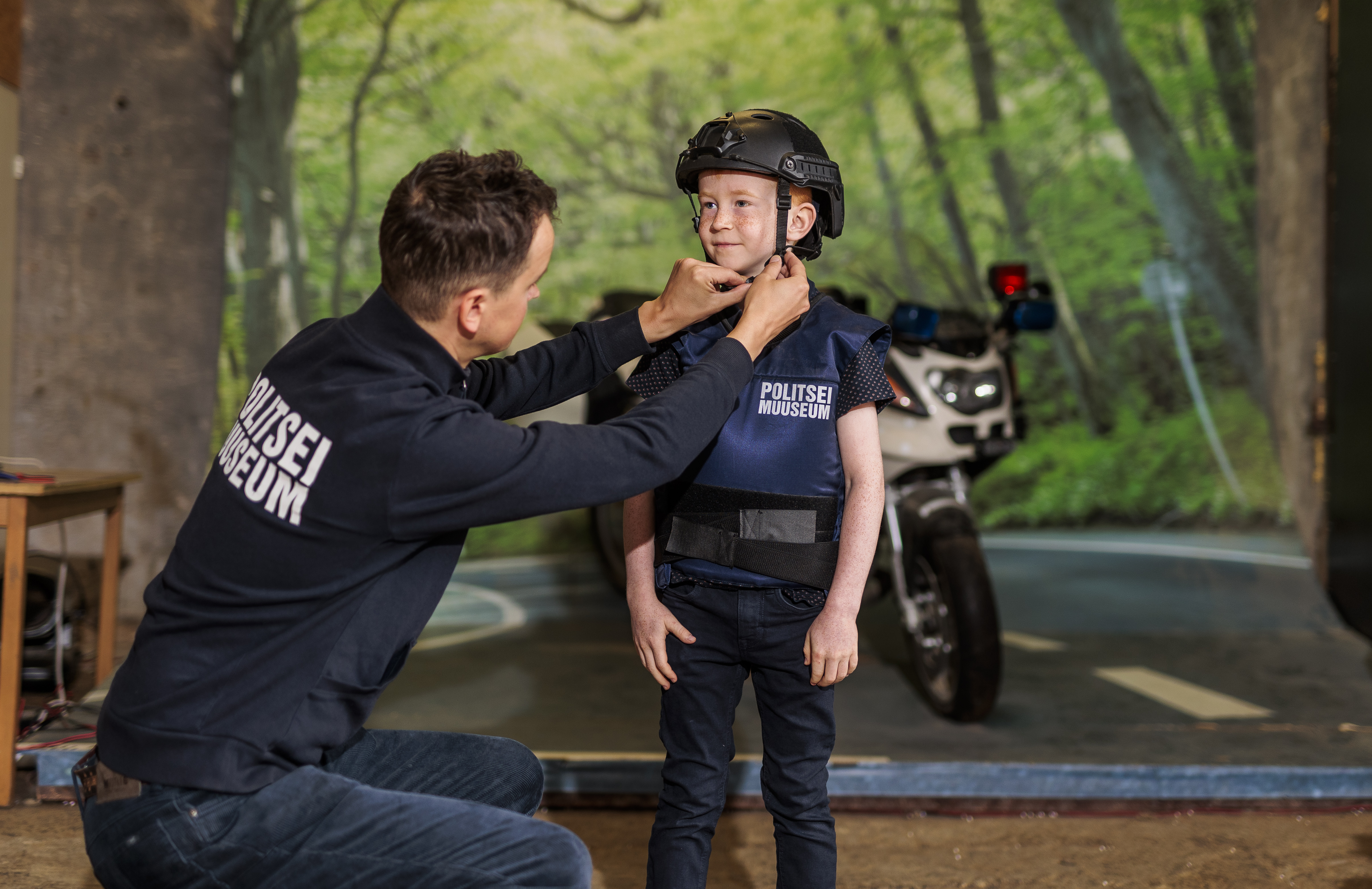
Photo: Karli Saul
At the AQVA water park you can splash around in pools with waves and waterfalls, ride a waterslide with light effects, relax in the jacuzzi or swim in the outdoor pool, which is open all year round. Switch off completely in the sauna world, where you can choose the one that suits you best – from steam and Finnish saunas to juniper and infrared saunas.
And if you really want to treat yourself, spa treatments and massages will help you forget all your everyday worries. The little ones haven’t been forgotten either – AQVA offers spa treatments suitable for children.
- Learn more → www.aqvahotels.ee
Photo: Sergei Zjuganov
Viljandi
Viljandi is Estonia's folk music capital – a cosy small town where medieval castle ruins, lake views and music create a special atmosphere. You can get here by direct train from Tallinn. Wander back through the centuries between the castle walls, cross the famous suspension bridge and look down from the Castle Hills to Lake Viljandi. Then stroll along the lakeshore and end the day with music or theatre.
Photo: Siim Verner Teder
Things to do in Viljandi
Within the walls of this once mighty medieval fortress, you can travel back through the centuries and imagine everyday life in the days of the Livonian Order knights. In its time, Viljandi Castle was one of the largest fortresses in Livonia.
Cross the red suspension bridge leading to the castle ruins – one of Viljandi's best-known symbols – and walk through the scenic Castle Hills, with views over Lake Viljandi. It's a great spot for history lovers and for anyone who simply wants to enjoy autumn colours and fresh air.
- Read more: Viljandi castle ruins
Lake Viljandi lies at the foot of the Castle Hills, and a flat walking and cycling path of about 12 km runs all the way around it. In autumn, golden and red trees are reflected in the water, and the path is just as good for a relaxed family walk as for a bike ride.
If the full loop feels too long, walk just part of it – you'll still get views of the castle hills from the lakeshore.
- Read more: Visit Viljandi
Viljandi is Estonia's folk music capital, and the Traditional Music Barn (Pärimusmuusika Ait) is at its heart. Check the programme to see whether there's a concert or a family-friendly workshop during the holidays.
If you're staying longer, end the day with a performance at the Ugala Theatre.
- Read more: Visit Viljandi
Valga
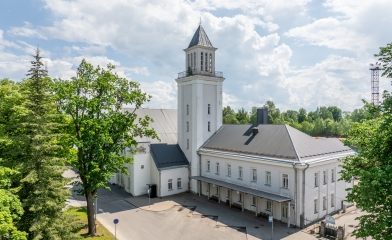
One town, two countries. Walk across the Estonian–Latvian border, enjoy some time at the Pedeli recreation area and discover the fascinating story of the border town at the Valga Museum. Valga is also a great starting point for exploring the Baltics – from here it's easy to continue by train towards both Riga and Vilnius.
Aegviidu
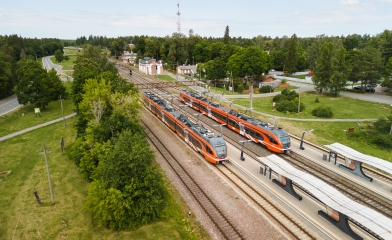
Aegviidu's Blue Springs (Siniallikad) are known for their distinctive bluish water, which gets its colour from the blue clay that has settled on the bottom. Once an ancient offering spring, the site is ideal for family walks and enjoying the nature of Kõrvemaa.
Paldiski
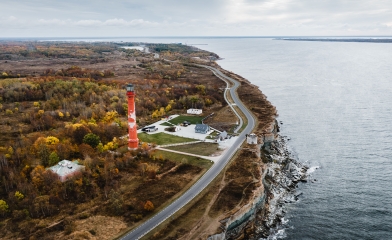
Did you know that some of Estonia's most picturesque sea views are just a train ride away? Discover the unique views from the Pakri cliffs, travel through Paldiski's fascinating history at the Paldiski Museum of Local History and take a peek inside the Amandus Adamson Studio Museum, where you can discover the work of one of Estonia's best-known sculptors in his historic summer home.
Kuhu järgmiseks? Vali oma peatus!
No, thanks. I’d rather go hiking in the forest.
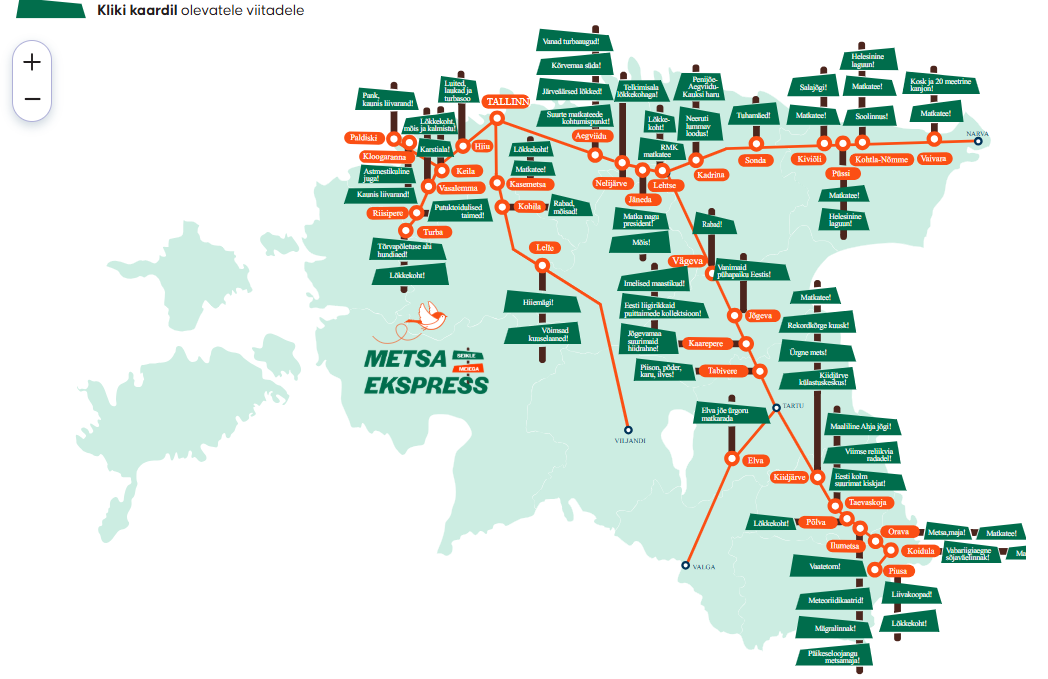
You got it! Forest Express has over 60 forest adventures for the school holidays.
Estonian nature is beautiful from the train window – and even more beautiful when you step off at a stop and head into the forest. Elron and RMK (State Forest Management Centre) have picked more than 60 hiking trails, campfire sites and natural sights close to the railway. On the map you’ll find a kingdom of wood ants, a badger town, meteorite craters and a bright blue lagoon. Come alone, with friends or with the family!
The Forest Express map and trail descriptions are currently in Estonian only.
Got questions?
Elron customer support is available every day from 6:00 to 24:00
Phone +372 616 0245
Email [email protected]
Service in English, Estonian and Russian.